

Introduction to Agentic AI
Artificial intelligence has evolved dramatically over the past decade, but agentic AI represents perhaps the most significant leap forward in how machines can think, plan, and act. Unlike traditional AI systems that simply respond to queries or perform single tasks, agentic AI systems can autonomously achieve complex goals with minimal human intervention.
In this comprehensive guide, we’ll explore what agentic AI is, how it works, and discover the real world applications that are already transforming industries across the globe. Whether you’re a business leader looking to understand this technology, a developer wanting to build autonomous systems, or simply curious about where AI is heading, this article will give you everything you need to know.
What is Agentic AI? A Simple Definition
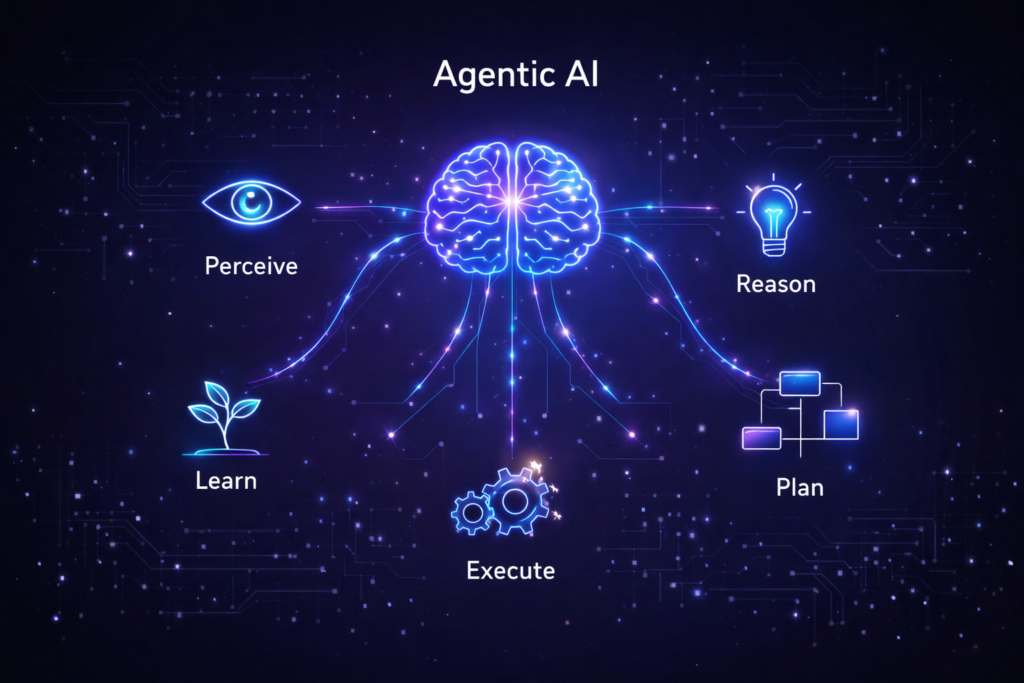
Agentic AI refers to artificial intelligence systems that can act as independent agents, capable of understanding goals, making decisions, and taking actions to achieve specific objectives without continuous human guidance.
The Simple Explanation of Agentic AI
Think of agentic AI as giving artificial intelligence a “brain” that can:
- Perceive its environment and gather information
- Reason about what actions to take
- Plan multi-step strategies to achieve goals
- Execute actions autonomously
- Learn from outcomes and adapt accordingly
Unlike a chatbot that waits for you to ask questions, an agentic AI system proactively works toward completing tasks. It’s the difference between a GPS that simply gives directions versus a self-driving car that actually takes you to your destination.
Key Characteristics of Agentic AI
| Characteristic | Description |
|---|---|
| Autonomy | Operates independently without constant human supervision |
| Goal-Oriented | Focuses on achieving specific objectives |
| Adaptive | Learns and adjusts based on outcomes |
| Proactive | Takes initiative rather than just responding |
| Multi-Step Reasoning | Can break complex tasks into manageable steps |
How Does Agentic AI Work?
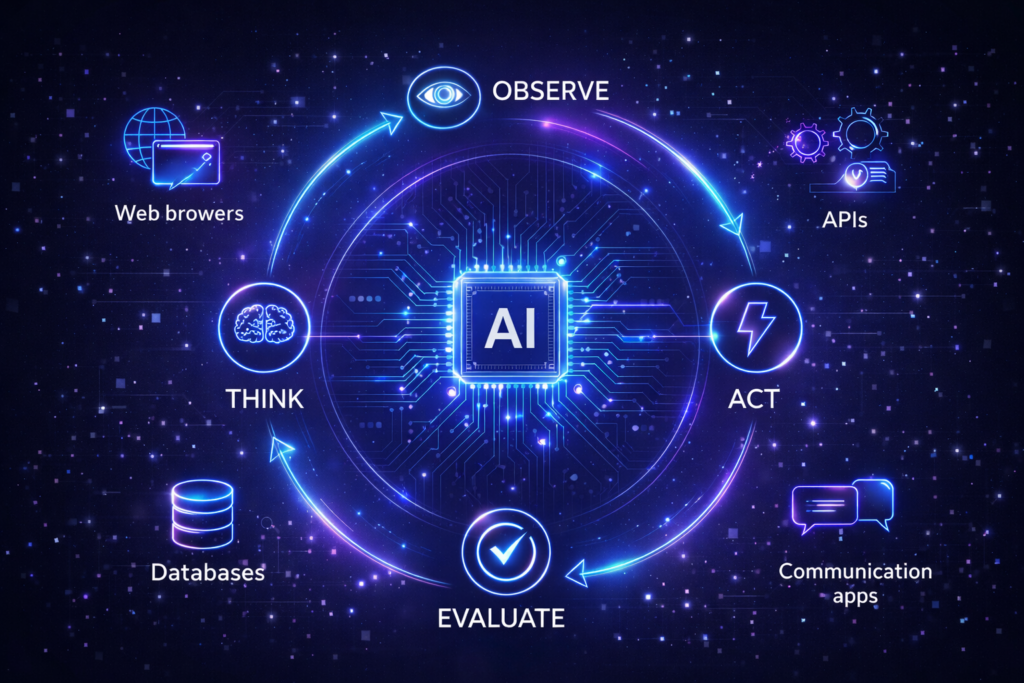
Understanding how agentic AI works requires exploring the sophisticated architecture that powers these autonomous systems. Let’s break down the process step by step.
The Core Working Mechanism
Goal Reception and Understanding
The agentic AI system first receives a high-level goal from a user. For example: “Book me a flight to Dubai for next week under $500 and arrange airport transportation.”
Task Decomposition
The AI agent breaks this complex goal into smaller, manageable tasks:
- Search for flights to Dubai
- Filter by price (under $500)
- Check availability for next week
- Compare options
- Book the best option
- Search for transportation services
- Arrange pickup
Planning and Strategizing
The system creates an execution plan, determining which tasks to do first, which can run in parallel, and what dependencies exist between tasks.
Tool Utilization
Agentic AI systems connect to external tools and APIs to accomplish tasks:
- Flight booking APIs
- Payment gateways
- Maps and transportation services
- Calendar integration
Execution and Monitoring
The agent begins executing tasks, monitoring progress, and handling any obstacles that arise.
Learning and Optimization
After completing the goal, the system learns from the experience to improve future performance.
The Power of Reasoning Loops
What makes agentic AI truly powerful is its ability to engage in reasoning loops:
Observe → Think → Act → Evaluate → RepeatThis continuous cycle allows the AI to:
- React to unexpected situations
- Correct mistakes in real-time
- Optimize strategies as new information becomes available
Key Components of Agentic AI Systems
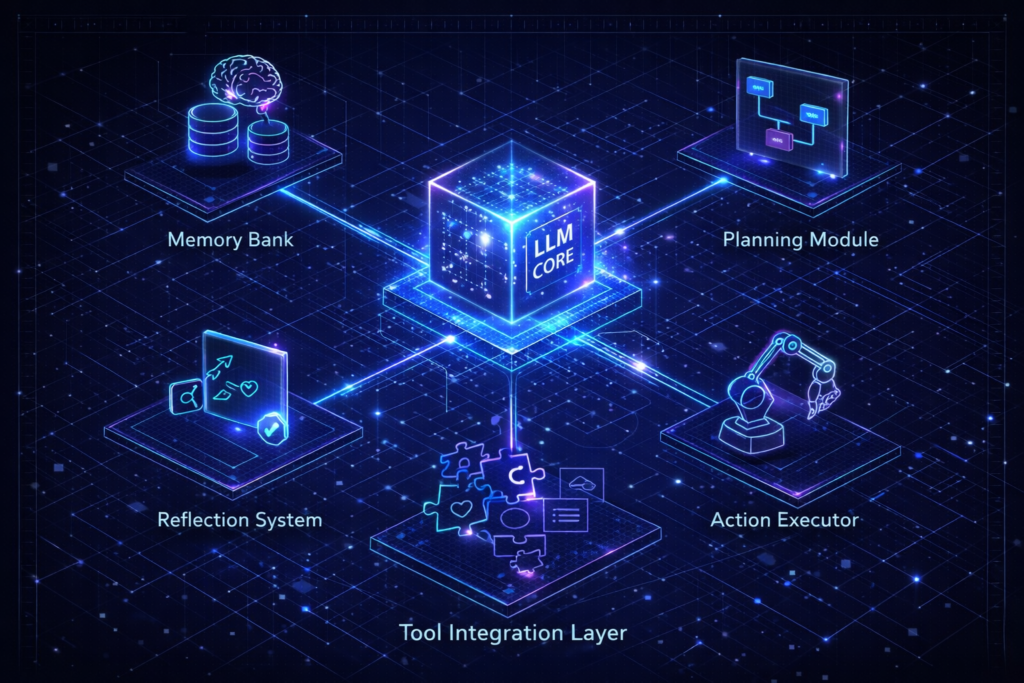
A robust agentic AI system consists of several critical components working together:
Large Language Model (LLM) Core
The “brain” of the agent, typically a powerful language model like GPT-4, Claude, or Gemini that provides:
- Natural language understanding
- Reasoning capabilities
- Knowledge synthesis
Memory Systems
Short-term memory: Keeps track of the current conversation and task context.
Long-term memory: Stores learned information, past experiences, and user preferences for future reference
Planning Module
Responsible for:
- Breaking down complex goals
- Creating execution strategies
- Prioritizing tasks
- Managing dependencies
Tool Integration Layer
Connects the agent to external capabilities:
- Web browsers
- APIs and databases
- File systems
- Communication platforms
- Custom software tools
Reflection and Self-Improvement
Advanced agentic AI systems can:
- Evaluate their own performance
- Identify mistakes and learning opportunities
- Improve strategies over time
Agentic AI vs Traditional AI: What’s the Difference?
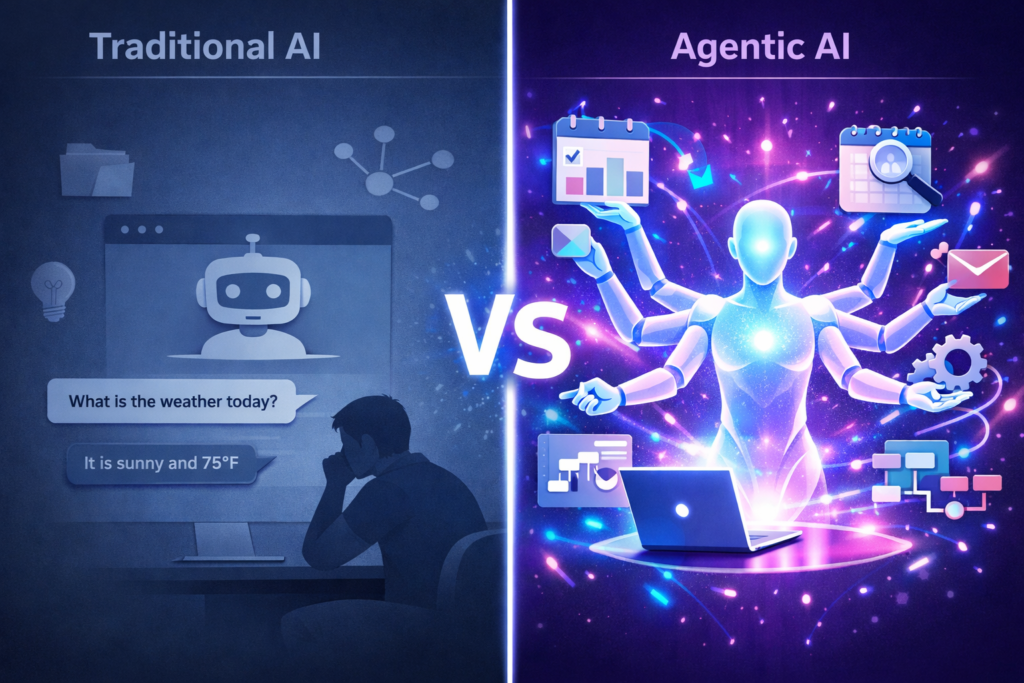
Understanding the distinction between agentic AI and traditional AI is crucial for grasping why this technology is so transformative.
| Aspect | Traditional AI | Agentic AI |
|---|---|---|
| Interaction | Responds to individual prompts | Pursues goals across multiple steps |
| Autonomy | Requires human guidance at each step | Operates independently |
| Scope | Single-task focused | Multi-task capable |
| Adaptability | Limited to training data | Learns and adapts in real-time |
| Tool Use | Rarely uses external tools | Integrates multiple tools seamlessly |
| Example | ChatGPT answering questions | AI agent booking travel and managing schedules |
Which of the Following Best Describes the Process of Agentic AI?
The best description would be: An autonomous system that can perceive its environment, reason about goals, plan multi-step actions, execute tasks using tools, and learn from outcomes—all with minimal human intervention.
Real World Applications of Agentic AI
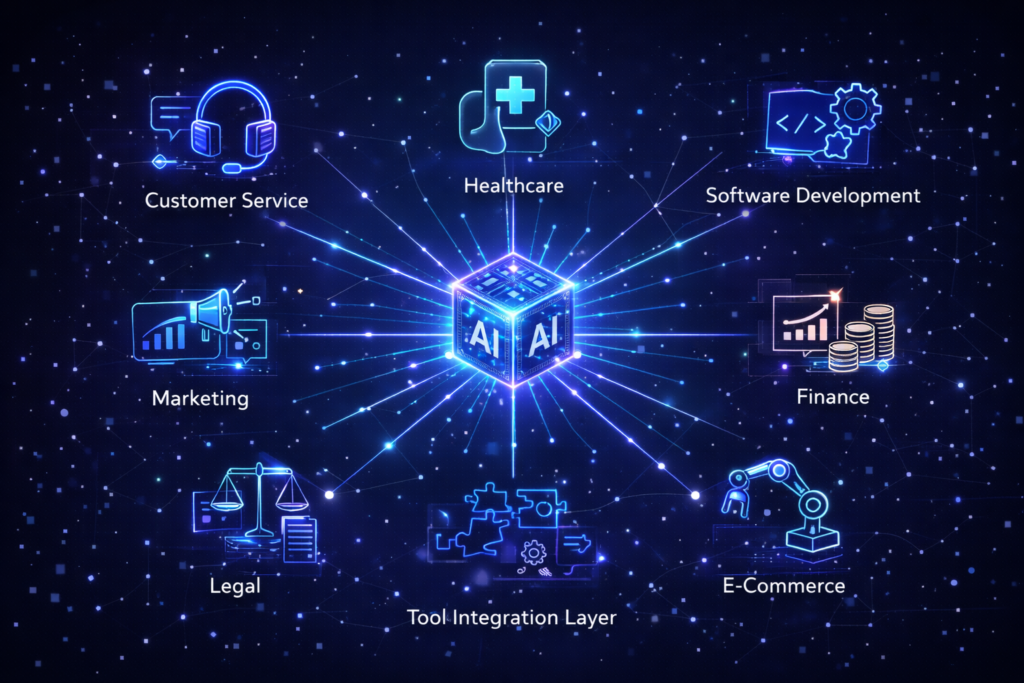
Now let’s explore where agentic AI can be used and examine practical cases across various industries.
Customer Service and Support
What is an example of agentic AI in customer service?
Modern customer service agentic AI can:
- Handle complex support tickets autonomously
- Access customer history and account information
- Process refunds and exchanges
- Escalate issues to human agents when necessary
- Follow up on resolved issues
Real-World Example: Companies like Intercom and Zendesk are deploying AI agents that can resolve up to 80% of customer inquiries without human intervention, from troubleshooting technical issues to processing returns.
Healthcare and Medical Assistance
Agentic AI is revolutionizing healthcare through:
- Patient Scheduling: Autonomous systems that manage appointments, send reminders, and handle rescheduling
- Medical Research: AI agents that can analyze research papers, identify patterns, and suggest treatment protocols
- Administrative Tasks: Handling insurance claims, managing records, and coordinating between departments
Software Development
What is Google’s Agentic AI?
Google has been developing agentic AI systems for software development, including:
- Code generation and debugging
- Automated testing
- Documentation creation
- Project management
Developers are already using AI agents like GitHub Copilot Workspace and Cursor AI that can:
- Understand project requirements
- Write entire features across multiple files
- Debug issues independently
- Create and run tests
Financial Services
Agentic AI is transforming finance through:
- Automated Trading: AI agents that analyze markets and execute trades
- Fraud Detection: Systems that identify suspicious patterns and take immediate action
- Personal Finance: Agents that manage budgets, optimize spending, and recommend investments
- Loan Processing: Autonomous systems handling applications from submission to approval
E-Commerce and Retail
Where do you usually see AI in your everyday life?
In e-commerce, agentic AI handles:
- Personalized product recommendations
- Inventory management and reordering
- Dynamic pricing optimization
- Customer journey orchestration
- Returns and refund processing
Legal and Compliance
Law firms and corporate legal departments use agentic AI for:
- Contract review and analysis
- Due diligence research
- Compliance monitoring
- Legal document preparation
Marketing and Content Creation
Modern marketing teams deploy AI agents for:
- Campaign planning and execution
- Content creation and optimization
- Social media management
- Performance analysis and reporting
What is an Example of an Agentic AI Workflow?
Let’s walk through a comprehensive example of an agentic AI workflow in action:
Scenario: AI Marketing Agent
Goal: “Create and launch a social media campaign for our new product launch next month.”
Step 1: Research and Analysis
- Analyze competitor campaigns
- Review past campaign performance
- Study target audience demographics
- Identify trending topics and hashtags
Step 2: Strategy Development
- Create campaign timeline
- Define key messages and themes
- Select optimal platforms
- Set budget allocation
Step 3: Content Creation
- Generate post copy for each platform
- Create image prompts for visual content
- Draft video scripts
- Design email sequences
Step 4: Scheduling and Execution
- Schedule posts across platforms
- Set up automated responses
- Configure tracking and analytics
- Coordinate with other team systems
Step 5: Monitoring and Optimization
- Track engagement metrics in real-time
- Adjust posting times based on performance
- A/B test content variations
- Report insights to stakeholders
Step 6: Learning and Improvement
- Analyze campaign results
- Document successful strategies
- Update knowledge base for future campaigns
- Recommend improvements for next launch
This entire workflow can be orchestrated by an agentic AI system, with human oversight at key decision points.
Where Would You Most Like to See Agentic AI Utilised in Your Daily Life?

The potential applications of agentic AI in everyday life are exciting. Here are areas where people are most eager to see this technology:
Personal Assistant Revolution
Imagine an AI agent that:
- Manages your entire calendar and scheduling
- Handles email responses and prioritization
- Books appointments and makes reservations
- Coordinates family schedules and activities
- Remembers preferences and anticipates needs Smart Home Management
Agentic AI for homes could:
- Optimize energy usage based on habits
- Manage grocery shopping and deliveries
- Coordinate home maintenance and repairs
- Ensure security and monitoring
- Control climate and lighting intelligently Health and Wellness
Personal health agents could:
- Monitor health metrics and trends
- Schedule medical appointments
- Remind about medications
- Coordinate with healthcare providers
- Suggest lifestyle improvements Financial Management
Personal finance agents could:
- Track all expenses automatically
- Optimize subscription services
- Negotiate better rates for services
- Manage investments based on goals
- Prepare tax documents
Benefits and Challenges of Agentic AI
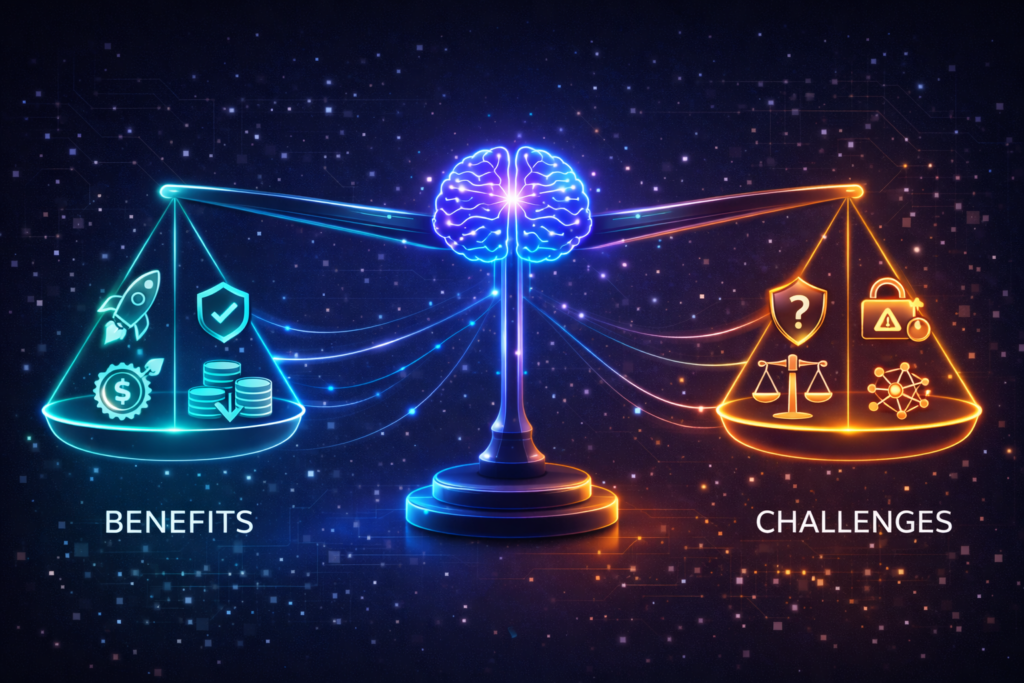
Unprecedented Productivity
- Handle complex tasks 24/7
- Execute faster than human workers
- Manage multiple workflows simultaneously
Consistency and Reliability
- No fatigue or emotional variability
- Follows protocols consistently
- Maintains quality standards
Cost Efficiency
- Reduce operational costs
- Scale without proportional cost increase
- Free human workers for higher-value tasks
Continuous Learning
- Improves with each interaction
- Adapts to changing conditions
- Shares learning across systems Challenges
Trust and Control
- Ensuring appropriate human oversight
- Managing autonomous decision-making
- Preventing unintended consequences
Security Concerns
- Protecting against misuse
- Securing access to tools and systems
- Preventing data breaches
Ethical Considerations
- Transparency in AI actions
- Accountability for decisions
- Job displacement concerns
Technical Complexity
- Integration with existing systems
- Reliability and error handling
- Scalability challenges
The Future of Agentic AI in 2026 and Beyond
As we look toward 2026 and beyond, several trends are shaping the future of agentic AI:
Multi-Agent Systems
Multiple AI agents working together, each specializing in different areas:
- Research agents
- Execution agents
- Quality control agents
- Communication agents Industry-Specific Agents
Specialized agents trained for particular domains:
- Legal AI agents
- Medical AI agents
- Financial AI agents
- Engineering AI agents Personal AI Teams
Everyone may eventually have access to their own team of AI agents:
- Personal assistant agent
- Research agent
- Creative agent
- Technical agent Enhanced Human-AI Collaboration
The future isn’t about AI replacing humans but augmenting human capabilities:
- Humans set goals and make key decisions
- AI agents handle execution and detail work
- Seamless collaboration between human creativity and AI efficiency
Frequently Asked Questions (FAQ)
What is an agentic AI example in the real world?
A real-world example is AutoGPT or similar agent systems that can take a high-level goal like “research and write a comprehensive report on renewable energy trends” and autonomously browse the web, synthesize information, write the report, and even format it—all without step-by-step human guidance.
How can agentic AI be used?
Agentic AI can be used for:
- Automating complex business processes
- Customer service and support
- Software development and testing
- Research and data analysis
- Personal assistance and scheduling
- Content creation and marketing
- Healthcare administration Which of the following is an example of agentic AI?
Examples include:
- AI coding assistants that can build entire features
- Autonomous customer service systems
- AI research agents that browse and synthesize information
- Smart home systems that proactively manage your environment What is the simple explanation of agentic AI?
Agentic AI is artificial intelligence that can work independently to achieve goals. Instead of just answering questions, it can plan tasks, use tools, make decisions, and complete complex multi-step projects with minimal human supervision.
How to explain AI in simple words?
Artificial intelligence (AI) is technology that allows computers to think and learn like humans. It can recognize patterns, understand language, make predictions, and solve problems. Agentic AI takes this further by allowing AI to act independently and complete tasks on its own.
What are some examples of agentic AI?
- GitHub Copilot Workspace: AI that can understand code requirements and implement features
- Google’s AI Agents: Autonomous systems for various tasks
- Customer service bots: That handle entire support interactions
- Trading algorithms: That make investment decisions
- AI assistants: That manage schedules and communications
Conclusion

Agentic AI represents a fundamental shift in how artificial intelligence works in our world. Moving beyond simple question-and-answer systems, these autonomous agents can perceive, reason, plan, and act to achieve complex goals—transforming industries from healthcare to finance, customer service to software development.
As we’ve explored in this comprehensive guide, the power of agentic AI lies in its ability to:
- Work autonomously toward goals
- Break down complex tasks intelligently
- Use tools and integrate with systems
- Learn and improve continuously
The real world applications we’re already seeing—from customer service automation to software development assistants—are just the beginning. As this technology matures through 2026 and beyond, we can expect agentic AI to become an integral part of how we work, live, and solve problems.
The question isn’t whether agentic AI will transform our world—it’s how we’ll shape that transformation.

Founder of Jobzhandle.com | Career Strategist & Personal Finance Enthusiast. I help professionals grow their skills, manage their money wisely, and explore new income opportunities. My goal is to turn career and financial goals into reality with simple, proven tips.
1 thought on “What is Agentic AI and How It Works in Real World Applications”