|
Getting your Trinity Audio player ready...
|
Master AI dropshipping in 2026. Learn to automate product research, ad copy, and US-based fulfillment to build a high-profit, brand-focused e-commerce store.
The New Era of AI Orchestration in E-Commerce
In 2026, the traditional dropshipping model has undergone a radical transformation. The days of manually hunting for products, writing generic descriptions, and hoping for the best are over. We have entered the age of AI Orchestration, where success is determined not by how hard you work, but by how intelligently you deploy automated systems.
For the modern e-commerce entrepreneur, AI is no longer just a “plus”—it is the core engine. By leveraging predictive analytics and generative content, retailers are reducing their operational workload by up to 70% while simultaneously increasing conversion rates. This guide breaks down exactly how to build a resilient, brand-first dropshipping business in the current USA market.
What is AI Dropshipping in 2026?
At its simplest, AI dropshipping is the use of artificial intelligence and machine learning to manage the four pillars of e-commerce: research, branding, marketing, and fulfillment. However, the definition has evolved. It is no longer about “1-click importing” thousands of junk products.
Instead, it’s about Predictive Sourcing. In 2026, AI tools analyze social sentiment on platforms like TikTok and Instagram to identify “winning” products weeks before they hit peak search volume. It is a data-driven approach that eliminates the “guess and check” method of the past decade.
Why AI is Non-Negotiable for US B2C Success
The American consumer in 2026 is highly sophisticated. They expect 3-5 day shipping, professional-grade visuals, and 24/7 personalized support. To meet these demands as a solo entrepreneur or a small team, automation is the only path.
The Efficiency Gain
Manual dropshipping usually requires 40+ hours a week for basic maintenance. An AI-optimized store can be managed in less than 10 hours a week. This allows the business owner to focus on high-level strategy and brand vision rather than the “busy work” of order processing.
Cost Reduction in Content Production
Previously, high-end product photography and video ads cost thousands of dollars. With tools like Midjourney and Flair.ai, you can now produce studio-quality visual assets for the cost of a monthly subscription.
Phase 1: Predictive Product Research & Niche Selection
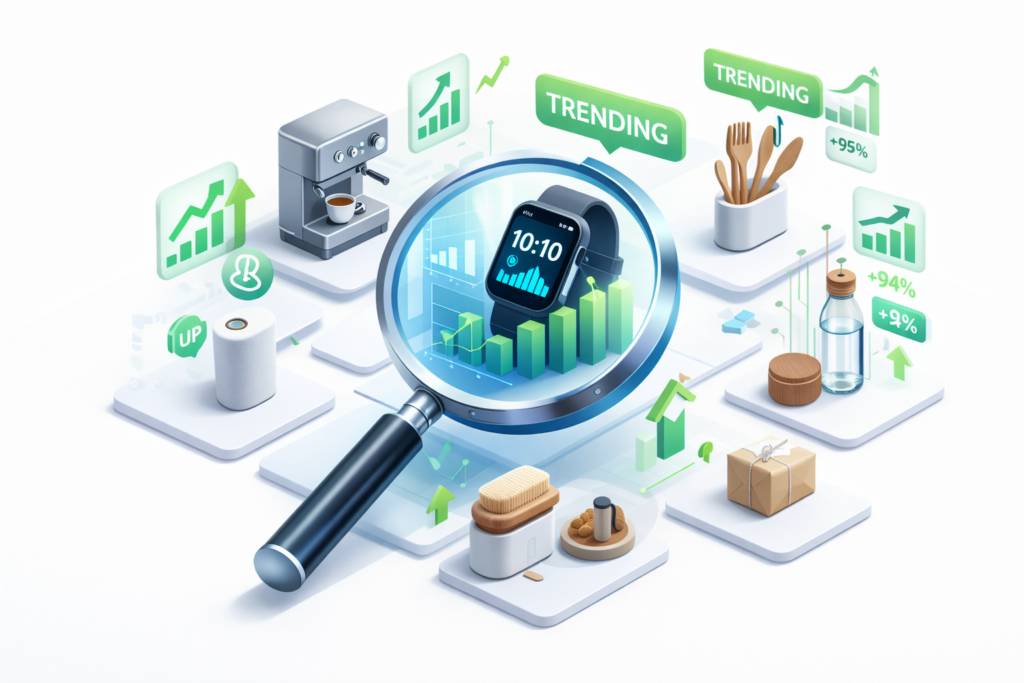
Most dropshipping stores fail because they sell what is currently popular. Success in 2026 comes from selling what is about to be popular.
Using Minea and Dropship.io
Tools like Minea go beyond simple ad spying. They use machine learning to assign a “success score” to products based on over 25 metrics, including velocity of engagement and competitive saturation.
The TikTok Shop Factor
TikTok Shop has redefined the US market. AI research tools now track real-time sales data from TikTok influencers. By spotting a product that is gaining traction in limited tests, you can secure US-based suppliers before the market becomes overcrowded.
Finding the “Topical Gap”
Don’t just look for a product; look for a problem. Use LLMs like Claude 3.5 to analyze hundreds of competitor reviews. Identify the “gaps”—the recurring complaints customers have. If you can find a supplier who has solved that specific pain point, your marketing becomes significantly easier.
Phase 2: Building a “Unique” Brand Identity
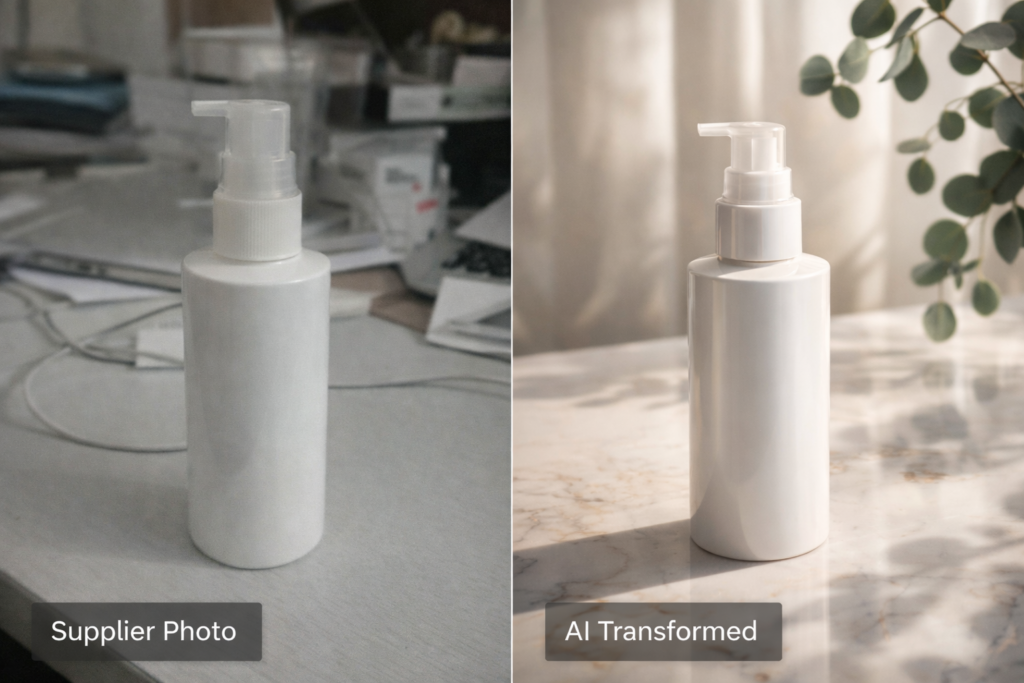
The biggest risk in 2026 is the “Death of the Generic Store.” Google and Meta have become increasingly efficient at identifying and deprioritizing stores that use stock supplier photos and duplicate descriptions.
Generative Product Photography (Flair.ai)
In the past, you had to order samples and hire a photographer. In 2026, you take the low-resolution supplier photo and use Flair.ai or Midjourney to perform a “virtual photoshoot.” You can place your product in a sunlit loft in New York or a coastal patio in California, creating a premium feel that matches the US B2C aesthetic.
AI Brand Building
Your brand voice must be consistent. Use AI to develop a Brand Identity Doc that includes your tone, target personas, and core values. This ensures that every email, ad, and product description feels like it came from the same human voice, building the trust required for high conversion rates.
Phase 3: Automated Marketing & Content Mastery
Marketing in 2026 is about Personalization at Scale. You are no longer writing one ad for everyone; you are writing dozens of variants tailored to specific user intents.
Semantic SEO and LSI Content
To rank organically, your product pages must satisfy “Topical Completeness.” AI helps cluster secondary keywords and semantic variants. For example, if you are selling eco-friendly kitchenware, your copy should naturally include terms like “sustainable living,” “plastic-free home,” and “biodegradable materials.”
Ad Copy with Jasper and Claude
Use Jasper AI or Claude to generate ad copy that follows proven frameworks like AIDA (Attention, Interest, Desire, Action).
The Pro Tip: Don’t just ask for an ad. Ask the AI to write a “Snippet-Ready” summary under 45 words. This increases the likelihood of your store being cited in Google’s AI Overview (SGE) when users ask, “What is the best eco-friendly blender?”
Generative Video Ads
Video is king on TikTok and Meta. Tools like HeyGen or Sora allow you to create video content without a camera crew. You can even generate “UGC-style” (User Generated Content) videos where an AI avatar reviews your product, mimicking the authentic feel that US consumers trust.
Phase 4: Operational Automation & The “USA Advantage”
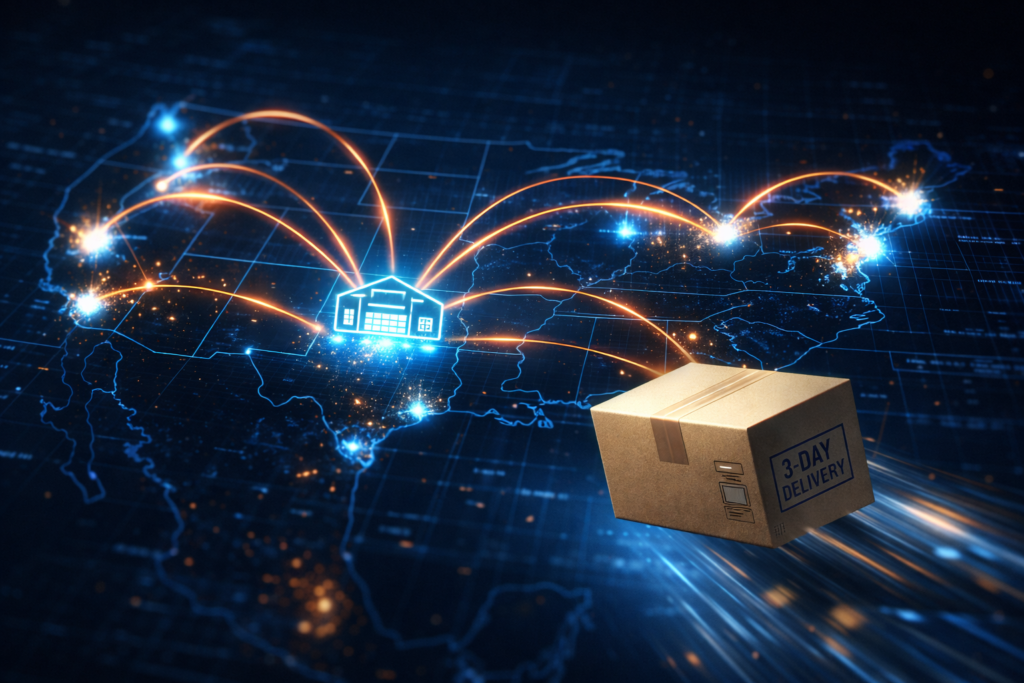
Shipping from overseas is the fastest way to kill a brand in 2026. US consumers will not wait 15 days for a package.
Domestic Fulfillment (The Zendrop/Spocket Filter)
Platforms like Zendrop, Spocket, and AutoDS now feature AI-driven filters for “US-Based Warehouses.” These suppliers offer 3-7 day shipping within the mainland United States.
Automated Order Processing
Once a customer places an order on your Shopify store, the AI-fulfillment tool (like DSers) should automatically:
- Verify the address for fraud.
- Send the order to the supplier.
- Upload the tracking number.
- Send a branded tracking email to the customer.
Dynamic Pricing & Inventory Monitoring
AI monitors your suppliers 24/7. If a supplier raises their price by $2, your store should automatically adjust your retail price to protect your margins. If a product goes out of stock, the AI should instantly hide that product from your storefront to prevent “unfulfillable” orders.
AI-Driven Customer Support: The RAG Model
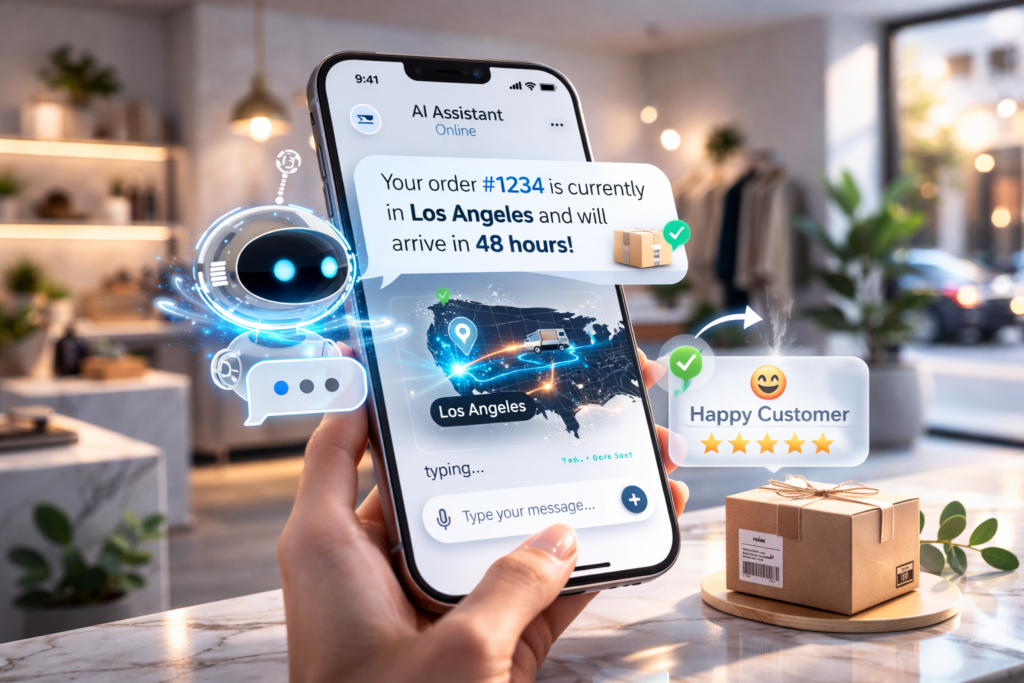
In 2026, a simple FAQ page isn’t enough. You need 24/7 support.
Retrieval-Augmented Generation (RAG)
Modern chatbots (via Zendesk or Gorgias) use RAG. Instead of giving generic answers, the AI “reads” your specific store policies, shipping times, and return rules. When a customer preguntes, “Where is my order?” the AI looks up the tracking number in real-time and provides a human-like update.
Preventing “The AI Look”
Avoid the robotic “As an AI, I can’t…” responses. Prompt your support bots to have a friendly, US-centric tone. High-quality support can reduce cart abandonment by up to 30%, as users feel more confident buying from a store that “responds” immediately.
Decision Framework: Your 2026 Tech Stack
| Business Area | Tool Level: Starter ($) | Tool Level: Scaler ($$$) |
|---|---|---|
| Product Research | TikTok Creative Center (Free) | Minea / Dropship.io |
| Store Platform | Shopify (Magic AI) | Shopify Plus + Custom UI |
| Automation | DSers (Free Tier) | AutoDS / Zendrop |
| Copywriting | ChatGPT-4o | Jasper AI / Claude Pro |
| Visuals | Canva Magic Studio | Midjourney / Flair.ai |
| Support | Tidio AI | Gorgias (RAG Integration) |
The Scale-Up Roadmap: From Zero to $10k/Month
- Month 1: Infrastructure. Set up your Shopify store, integrate your AI stack, and select three sub-niches to test.
- Month 2: The Creative Sprint. Use Midjourney to create 20 unique ad creatives for your top 5 products.
- Month 3: Data Harvesting. Run small-budget Meta/TikTok ads. Use AI analytics to see which “entities” and “keywords” are driving clicks.
- Month 4: Optimization. Double down on the winners. Use AI to rewrite your landing pages based on customer behavior data.
Ethics, Compliance, and Risks
While AI is powerful, it comes with responsibilities.
FTC Disclosures
In the USA, you must be transparent. If you use an AI chatbot, it’s best practice to let the user know they are speaking with an assistant. Similarly, if you generate “customer reviews” using AI (which we do not recommend), you are entering a legal grey area. Authentic reviews are an essential E-E-A-T signal that AI cannot yet truly replace.
Preventing Ad Delivery Filters
Meta and Google are getting better at detecting “AI Slop.” Content that is clearly low-effort AI will be penalized with higher CPMs (Cost Per Thousand impressions). Always put a “Human-in-the-Loop” to edit and refine AI output for brand voice.
🔹 Common Questions About AI Dropshipping
Is dropshipping with AI actually profitable in 2026?
Yes. While competition is higher, your overhead is significantly lower. By automating tasks that used to require a VA (Virtual Assistant), you keep a much larger percentage of your profit margins.
Can AI find winning products on TikTok Shop?
Absolutely. Tools like Dropship.io specialize in tracking TikTok Shop trends. They analyze the relationship between influencer posts and sales spikes to identify products with high viral potential.
How do I handle shipping delays with AI?
AI can’t move the mail faster, but it can predict delays. Advanced fulfillment tools monitor shipping lanes. If a specific carrier is having issues in the US Northeast, your AI can automatically switch your shipping preference to a different carrier to maintain your 3-5 day promise.
Does AI-generated content look fake to customers?
Only if you don’t edit it. Using “raw” AI output is a mistake. The key is to use AI for the 80% of manual work (drafts, structures, initial designs) and then apply a 20% human “polish” to ensure it resonates with US cultural nuances.
Is there a cost for these AI tools?
Yes. A professional “AI Tech Stack” will generally cost between $100 and $250 per month. However, this replaces the need for hiring graphic designers, copywriters, and customer service reps, saving you thousands in the long run.
How do I prevent my store from being banned on Meta?
Meta often flags stores with high “Customer Dissatisfaction” scores. By using AI to ensure accurate product descriptions and using US-based suppliers to prevent late shipping, you significantly lower your risk of being banned.
What is the best AI for e-commerce video ads?
As of 2026, Creatify AI and HeyGen are the leaders. Creatify allows you to turn a product URL into a high-converting video ad in minutes, complete with script and voiceover.
Conclusion: The Action Plan
The window of opportunity for “manual” dropshipping is closing, but the era of the AI-Powered Brand is just beginning. To succeed in the USA B2C market, you must focus on speed of delivery and uniqueness of branding.
- Immediate Step: Audit your potential niche using Minea to verify 2026 viability.
- Branding Step: Refresh your top 3 products using Flair.ai to create unique, non-stock visuals.
- SEO Step: Add FAQ schema and structured data to your store so Google’s Knowledge Graph understands your entity.
By moving from a “seller” to an “orchestrator,” you unlock the true potential of e-commerce: a business that scales without breaking, powered by the most advanced technology humanity has ever created.

Founder of Jobzhandle.com | Career Strategist & Personal Finance Enthusiast. I help professionals grow their skills, manage their money wisely, and explore new income opportunities. My goal is to turn career and financial goals into reality with simple, proven tips.