
|
Getting your Trinity Audio player ready...
|

| Can an SMM panel really unlock YouTube monetization? Get the full truth — what works, what risks you face, and what actually grows your channel in 2025. |
Every YouTube creator knows the feeling. You’ve been posting consistently for months. Your subscriber count is crawling. The YouTube Partner Program threshold — 1,000 subscribers and 4,000 valid watch hours — feels like it’s getting further away, not closer.
Then you discover SMM panels. Services that promise 1,000 subscribers for $5. Four thousand watch hours delivered overnight. Monetization, unlocked in 48 hours.
It sounds almost too convenient. And that’s exactly the problem.
This article gives you the complete, honest picture — what SMM panels actually are, what YouTube does when it detects them, the real risks to your channel and AdSense account, and the strategies that legitimately build a monetizable YouTube presence in 2025.
What Is an SMM Panel, Exactly?
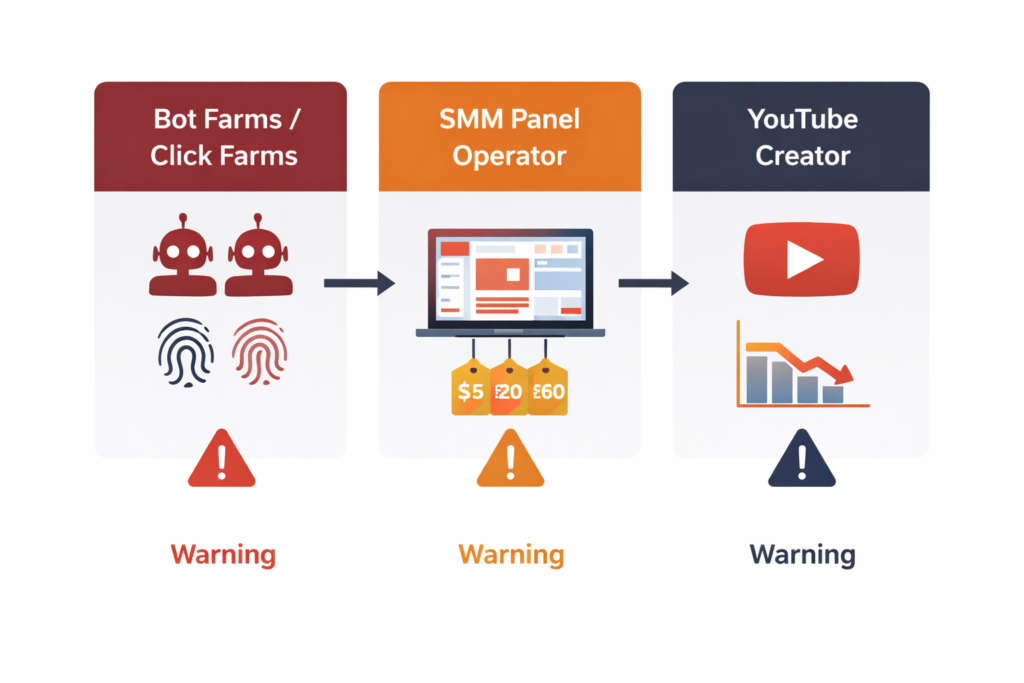
An SMM panel — short for Social Media Marketing panel — is an online reseller platform that sells bulk engagement metrics across social platforms. For YouTube, this typically means subscribers, watch hours, views, likes, and sometimes comments.
These services are built on a layered supply chain. At the top are bot networks and click farms — either software-automated bots or low-wage workers paid fractions of a cent to watch videos and subscribe to channels. Panel operators buy this engagement in bulk and resell it through a dashboard interface where creators can place orders in minutes.
The pricing is designed to feel like a bargain. A thousand subscribers for $4 to $20. Four thousand watch hours for $10 to $60. Ten thousand views for under $15. And it’s all framed around one promise: get you past the YouTube Partner Program threshold faster.
Here’s what that supply chain actually delivers when it reaches your channel.
Understanding YouTube Monetization in 2025
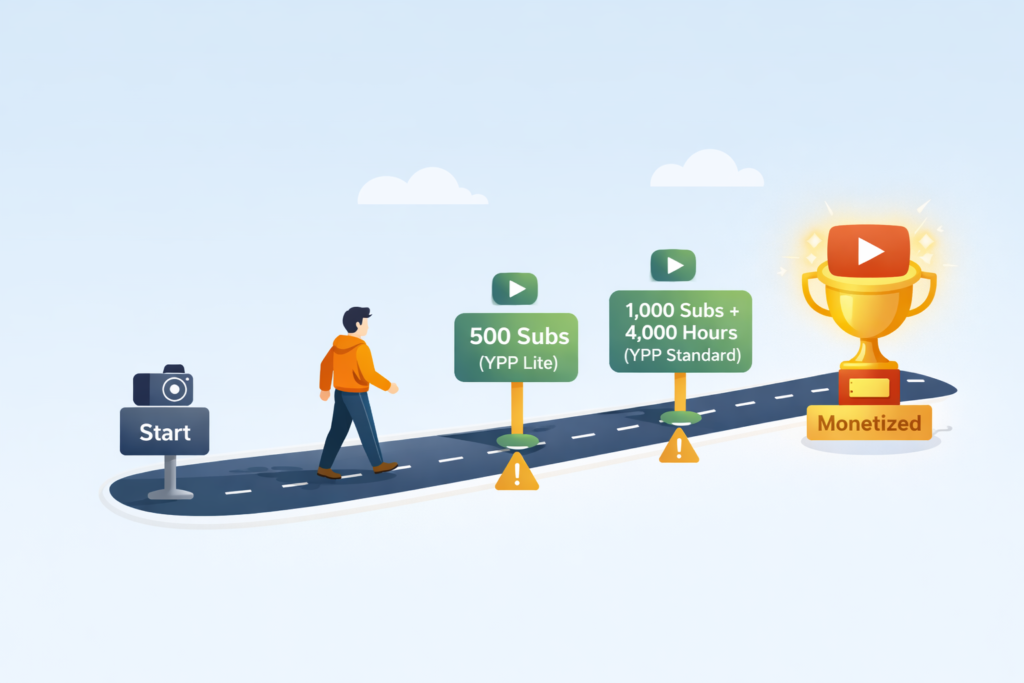
Before evaluating whether any shortcut works, it helps to understand exactly what YouTube monetization requires — and specifically what the word “valid” means in YouTube’s policy language.
YouTube Partner Program — Two Tiers
| �� YPP Standard Tier (Full Ad Revenue) |
| • 1,000 subscribers |
| • 4,000 valid public watch hours in the last 12 months OR 10 million valid Shorts views in 90 days |
| • No active Community Guidelines strikes |
| • Linked and approved AdSense account |
| • 2-step verification enabled on Google account |
| �� YPP Lite Tier (Fan Funding Only — No Ad Revenue) |
| • 500 subscribers |
| • 3 public uploads in the last 90 days |
| • 3,000 valid public watch hours OR 3 million Shorts views in 90 days |
| • Enables: Super Thanks, Super Chat, Channel Memberships, Shopping |
| • Does NOT enable ad revenue from YouTube ads |
The word “valid” is doing enormous work in both of those requirements. YouTube does not count every view, subscriber event, or watch session. It counts only legitimate activity from real human viewers. Any engagement that originates from bots, automated scripts, click farms, or purchased bulk services is classified as invalid — and invalid activity is not counted toward your threshold.
This is the foundational reason why SMM panels cannot deliver real YouTube monetization, regardless of how the service is marketed.
Can an SMM Panel Actually Get You Monetized?

| ⚡ Quick Answer |
| No. SMM panels sell artificial engagement that YouTube classifies as invalid. Fake subscribers and bot watch hours do not count toward YPP thresholds. YouTube’s systems detect and remove this activity — and your channel faces significant policy risk in the process. |
Let’s walk through what actually happens when a creator buys subscribers and watch hours from an SMM panel:
- You place an order. Delivery begins within hours — your subscriber count climbs, your watch hour dashboard fills up.
- YouTube’s real-time traffic analysis flags the engagement. IP clusters, device fingerprinting, and session behavior don’t match real human viewing patterns.
- Within days to weeks, YouTube performs a periodic audit. Invalid accounts are removed. Watch hours from non-human sessions are recalculated out of your total.
- Your subscriber count drops, often dramatically. Your watch hours may reset below the threshold even if you’d technically crossed it.
- You apply for YPP — or YouTube reviews your channel during the process. The application is denied.
- In more serious cases, your channel receives a strike under YouTube’s spam and deceptive practices policy.
The creator who spent $30 on panel services is now back below 200 subscribers, has a channel strike on record, and has alerted YouTube’s systems to their account. Some go through this cycle two or three times before giving up.
The Risk Most Creators Underestimate: Your AdSense Account
Channel strikes are recoverable. Three strikes leads to termination, but most first-time incidents can be resolved. What’s far more serious — and almost no one talks about this — is the AdSense risk.
AdSense is Google’s advertising revenue platform. It’s what pays you. And Google’s Invalid Traffic (IVT) detection system operates independently from YouTube’s. If your AdSense account is flagged for invalid click or view activity, Google can terminate it permanently.
That termination doesn’t just affect your current channel. It locks you out of every Google monetization product: YouTube, any websites using AdSense, Google Ad Manager. And AdSense appeals are rarely successful — the process is notoriously difficult, and reversals are uncommon.
| ⚠ This Is the Career-Ending Risk |
| A new YouTube channel can be rebuilt. A new domain can be monetized. |
| A terminated AdSense account means you cannot receive YouTube ad revenue on any channel, ever, under that Google account. |
| This is a permanent consequence for what often starts as a $10 purchase. |
How YouTube Detects Fake Engagement
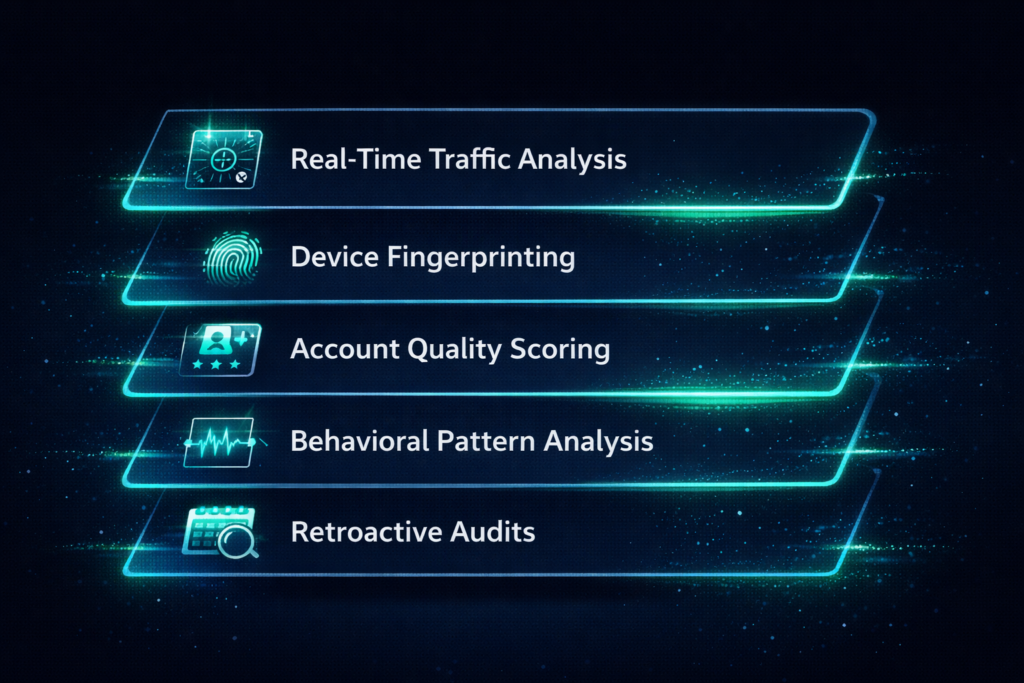
YouTube and Google have invested heavily in traffic quality systems. Understanding how they work helps explain why the “high-retention” and “drip-feed” marketing claims from SMM panels don’t hold up.
Five Layers of Detection
- Real-Time Traffic Analysis: YouTube monitors IP address patterns, VPN/proxy clusters, and data center traffic that no legitimate viewer would generate.
- Device Fingerprinting: The same device or browser configuration watching hundreds of videos in sequence is flagged — bot farms produce predictable device signatures.
- Account Quality Scoring: Every Google account has an activity score. New accounts with no Gmail, Maps, or Search history that suddenly subscribe to 50 channels in an hour score extremely low.
- Behavioral Pattern Analysis: Real viewers vary their watch percentage, pause, rewind, and skip. Bots often watch exactly the same percentage of every video, or jump to specific timestamps — patterns that stand out statistically.
- Retroactive Audits: YouTube doesn’t just catch bots in real time. It runs periodic lookbacks on channels applying for YPP, recalculating their valid metrics after removing invalid accounts.
The “drip-feed” option sold by many SMM panels — which delivers subscribers slowly over days or weeks to “look organic” — doesn’t bypass any of these layers. It just delays the audit outcome. The engagement is still artificial. The accounts still have low quality scores. The behavioral signals still don’t match real viewers.
SMM Panel vs. Legitimate YouTube Growth: Side by Side
| Factor | SMM Panel | Legitimate Growth Strategy |
| Cost | $5–$100 | Free–$15/month (tools) |
| Subscribers gained | Fake accounts (purged) | Real, engaged subscribers |
| Watch hours counted by YPP | Zero (invalid) | Yes — all count |
| Revenue generated | $0 | Grows with real views |
| Channel health impact | Damages engagement rate | Builds algorithm trust |
| Risk of channel ban | High | None |
| AdSense termination risk | Medium–High | None |
| Long-term sustainability | None | Compounds over time |
What Actually Works: Legitimate YouTube Growth in 2025
Organic growth is slower. It takes real effort. But it builds something an SMM panel never can — an actual audience that watches, subscribes, and generates the valid engagement that unlocks real monetization.
1. YouTube Shorts for Rapid Early Growth
YouTube Shorts is the single fastest legitimate path to reaching 1,000 subscribers for new channels. Shorts are pushed aggressively by YouTube’s recommendation system — a well-executed Short can reach tens of thousands of viewers on a channel with zero subscribers.
For the YPP Lite tier (500 subs, 3 million Shorts views), this is particularly powerful. But even for Standard tier, Shorts-driven subscribers convert into long-form viewers who generate valid watch hours.
2. SEO-Led Content Strategy
YouTube is the world’s second-largest search engine. Creators who treat it like one grow faster and more predictably than those who rely purely on the algorithm’s browse feature.
Use tools like VidIQ or TubeBuddy to find keywords with decent search volume and low competition in your niche. Put the primary keyword in the first 60 characters of your title, write a 200–400 word description with semantic variations, and use 15–20 tags mixing exact-match and broad-match terms.
3. Audience Retention Optimization
YouTube’s algorithm doesn’t reward raw view counts — it rewards watch time and audience retention. A video that keeps 60% of viewers through to the end signals value. A video where 80% click away in the first 30 seconds signals the opposite, and the algorithm reduces its distribution.
Hook viewers in the first 30 seconds with an open loop — a question, a surprising claim, or a direct promise of what the video delivers. Add pattern interrupts every 60–90 seconds. End with a clear next-action CTA.
4. Consistency Over Intensity
The YouTube algorithm rewards consistent uploading schedules. One video per week, published on the same day and time, outperforms a burst of five videos in one week followed by silence.
For new channels building toward 4,000 watch hours, two 10–15 minute well-optimized videos per week generates roughly 800–1,200 watch minutes per video from organic traffic. At that rate, you can reach the threshold in three to four months without spending a dollar.
5. Cross-Platform Traffic Driving
Driving external traffic to your YouTube channel signals to the algorithm that your content has value beyond YouTube’s own discovery system. The most effective free sources:
- Reddit communities in your niche — answer questions genuinely, link to relevant videos when they add real value
- Quora answers — find questions your videos answer, provide a complete written response, then link to the video for the full walkthrough
- Email list — even a small list of 200 subscribers who watch your video in the first hour of publishing is a powerful early-signal mechanism
- Pinterest — for tutorial and how-to content, Pinterest drives consistent long-tail traffic to YouTube videos months after publishing
Tools Worth Using Instead of an SMM Panel
| Tool | What It Does for Your Channel |
| VidIQ (Free + $7.50/mo) | Keyword scoring, competitor analysis, trend alerts, real-time channel analytics |
| TubeBuddy (Free + $4.99/mo) | A/B thumbnail testing, tag explorer, bulk description editing, SEO scorecard |
| Canva (Free + $12.99/mo) | Custom thumbnail creation — high CTR thumbnails are the single fastest way to grow views |
| Social Blade (Free) | Track competitor growth patterns; identify what’s working for channels in your niche |
| Google Trends (Free) | Identify rising topics in your niche before competitors — timing content around trends accelerates early views |
| Google Ads for Video | The legitimate paid alternative to SMM panels — real views from real targeted humans, fully policy-compliant |
The combined monthly cost of VidIQ’s paid tier plus Canva Pro is around $20. That $20, applied consistently to content optimization over three months, produces more genuine subscribers and valid watch hours than any SMM panel investment — without any risk of losing your channel.
Why Monetization Is Worth the Legitimate Effort
One thing creators don’t always consider before fixating on hitting the YPP threshold: what does real monetization actually pay?
YouTube ad revenue is measured in CPM (cost per thousand ad impressions) and RPM (revenue per thousand video views after YouTube’s 45% cut). In the United States, CPM varies dramatically by niche:
| Content Niche | USA Average CPM | Monthly Earnings at 100K Views |
| Finance / Investing | $12 – $35 | $800 – $2,300+ |
| Tech / SaaS / Digital Marketing | $8 – $22 | $500 – $1,500 |
| Real Estate | $8 – $20 | $500 – $1,300 |
| Education / Online Courses | $6 – $16 | $350 – $900 |
| Gaming | $2 – $8 | $110 – $450 |
| Lifestyle / Vlogging | $2 – $7 | $90 – $350 |
A finance channel doing 100,000 monthly views with a real, engaged US audience can earn $800 to $2,300+ from ad revenue alone — before sponsorships, affiliate links, or channel memberships. That same channel with 100,000 bot views earns exactly $0, because advertisers pay for real human impressions.
The math makes the argument for legitimacy clearly. Real monetization compounds. Bot metrics decay.
Already Bought from an SMM Panel? Here’s What to Do

If you’ve already used an SMM panel and are worried about your channel, here’s a practical response plan:
- Stop all panel orders immediately. Every additional purchase increases your exposure.
- Do not apply for YPP right now. Applying while your metrics contain artificial engagement virtually guarantees denial and flags your account for closer review.
- Give the channel 30–60 days. YouTube’s periodic audits will run naturally. Your counts will drop. Let this happen — trying to compensate with more panel purchases worsens your position.
- Focus on publishing legitimate content during this period. Real views and watch time begin building a valid baseline.
- Once your metrics reflect genuine organic activity, apply for YPP. A clean application based on real engagement has a far higher approval rate.
If you’ve already received a strike: do not panic. A single strike expires after 90 days with no further violations. Continue creating legitimate content, read the specific Community Guidelines section cited in the strike notice, and do not purchase additional engagement services.
Frequently Asked Questions
Does buying YouTube subscribers from an SMM panel help with monetization?
No. Purchased subscribers are classified as invalid by YouTube’s audit systems. They don’t count toward your YPP threshold, and they’re typically removed within days to weeks of delivery. Beyond not helping, they actively harm your engagement rate — a metric that affects how YouTube distributes your videos.
Can YouTube actually detect fake watch hours from an SMM panel?
Yes, reliably. YouTube uses a multi-layer detection system that analyzes IP patterns, device fingerprints, session depth, behavioral signals, and account quality scores. Watch hours from bot sessions are classified as invalid and excluded from your monetization calculations — even if they appeared on your dashboard temporarily.
What happens if YouTube catches you using an SMM panel?
Consequences range from subscriber/view count purges (most common) to Community Guidelines strikes, YPP application denial, removal from YPP if already enrolled, or in serious cases, channel termination. The most severe and underreported consequence is AdSense account termination, which prevents you from earning YouTube ad revenue on any channel permanently.
Is it illegal to buy YouTube subscribers in the USA?
Buying subscribers isn’t criminally illegal in the United States. It is, however, a direct violation of YouTube’s Terms of Service and Google AdSense Program Policies. The consequence isn’t legal prosecution — it’s channel termination and permanent AdSense bans, which are enforced regularly.
What is the fastest legitimate way to get 1,000 YouTube subscribers?
The fastest compliant route combines consistent YouTube Shorts posting (aim for daily if possible), one or two long-form SEO-optimized videos per week, and driving initial traffic from one or two external platforms — Reddit communities and Pinterest are particularly effective for discovery-stage channels. Most focused creators hit 1,000 subscribers organically within 3–6 months using this approach.
Are there any SMM panel services that are safe to use for YouTube?
No SMM panel service is policy-compliant for YouTube, regardless of how it markets itself. Services labeled “high-retention,” “real subscribers,” or “drip-feed” still source engagement artificially. The source is what violates YouTube’s Terms of Service — not the delivery speed or the quality tier label attached to it.
How long does it realistically take to get YouTube monetized without buying anything?
For a creator publishing consistently with a clear niche and decent SEO optimization, three to six months is realistic for reaching 1,000 subscribers. The 4,000-hour watch time threshold typically takes slightly longer — but a single long-form video that ranks in YouTube search can generate hundreds of valid watch hours on its own over its lifetime.
Does YouTube Shorts help with monetization faster?
Yes, in two ways. First, Shorts have their own monetization pathway through the YPP Lite tier (3 million Shorts views). Second, viral Shorts drive rapid subscriber growth — which then converts into long-form viewers who generate valid watch hours. Many creators reach the full YPP threshold faster by using Shorts as a subscriber funnel feeding into long-form content.
Conclusion: The Numbers on Your Dashboard Aren’t the Goal
SMM panels are built around a compelling illusion: that the numbers on your YouTube dashboard are the goal. Get to 1,000. Get to 4,000 hours. Apply. Done.
But YouTube’s monetization system isn’t measuring your dashboard numbers — it’s measuring valid engagement from real human viewers. And the entire infrastructure of the platform, from its traffic analysis systems to its AdSense fraud detection, is specifically designed to distinguish real engagement from artificial inflation.
The $5 or $50 spent on a panel doesn’t just fail to deliver the shortcut it promises. In the worst cases, it costs creators the AdSense account they need to ever earn from YouTube at all — permanently.
The legitimate path is slower. It requires consistent content, real optimization, and time. But it builds something the algorithm actually rewards: an audience. And a real audience doesn’t get purged overnight.
| ✅ Your Starting Point Today |
| 1. Install VidIQ (free tier) and research 10 low-competition keywords in your niche. |
| 2. Publish your first YouTube Short this week — trending audio, clear value, niche-relevant. |
| 3. Write a fully optimized description for your next long-form video using semantic keyword variations. |
| 4. Pick one external platform (Reddit or Pinterest) and start contributing genuinely in your niche. |
| 5. Track your real metrics weekly in YouTube Studio — audience retention and CTR tell you more than raw view counts. |

Founder of Jobzhandle.com | Career Strategist & Personal Finance Enthusiast. I help professionals grow their skills, manage their money wisely, and explore new income opportunities. My goal is to turn career and financial goals into reality with simple, proven tips.