|
Getting your Trinity Audio player ready...
|
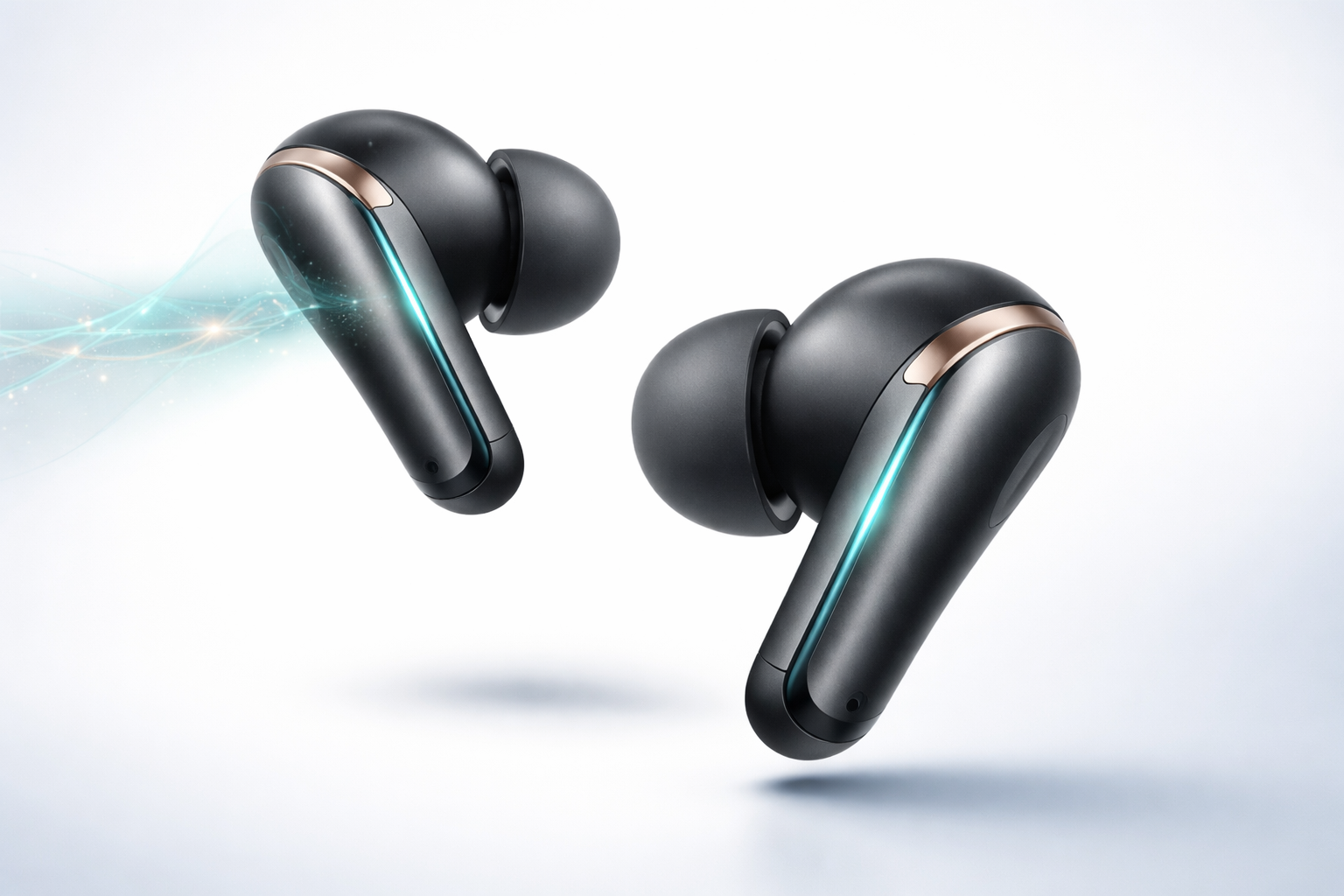
OpenAI’s AI earbuds “Sweetpea” launch late 2026 with ChatGPT built-in, 2nm processor, and Jony Ive design. Full guide on features, price, and specs.
📌 Editorial Note: This article is based on publicly reported rumors, industry sources, and speculation. OpenAI has not officially announced these earbuds. All specifications, prices, and release dates should be considered unconfirmed until an official announcement is made.
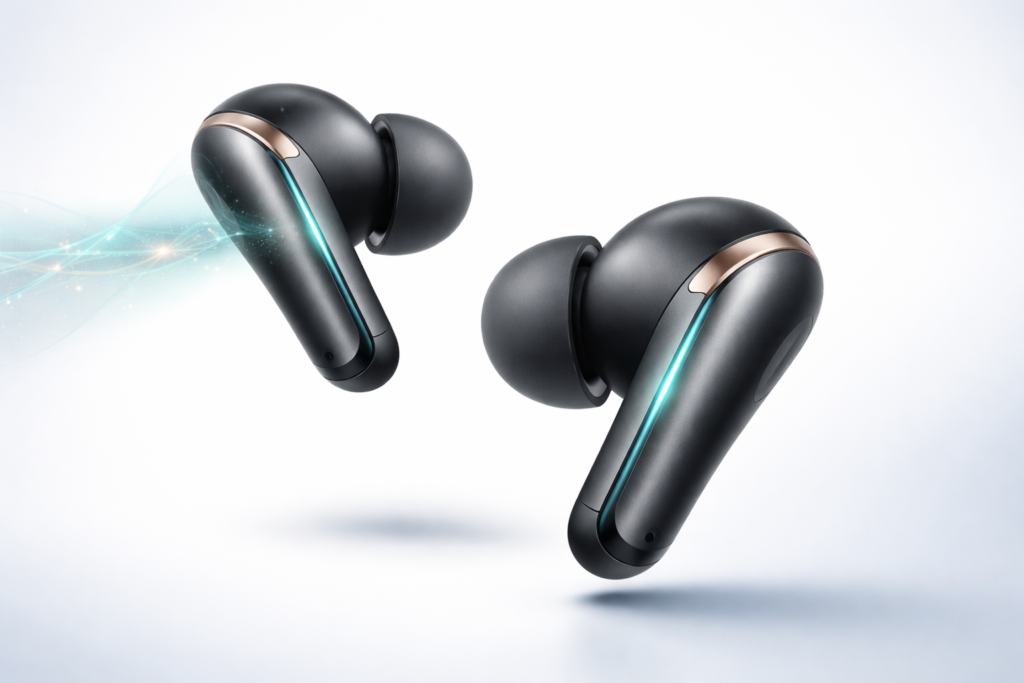
The moment OpenAI announced its $6.5 billion acquisition of Jony Ive’s hardware startup, the tech world knew something big was coming. Reports now suggest we may know what it is: AI-powered earbuds that could fundamentally change how we interact with technology.
Codenamed “Sweetpea,” according to multiple sources, these wireless earbuds reportedly represent OpenAI’s first consumer hardware product. Unlike anything currently on the market, they’re said to put ChatGPT directly in your ears — potentially without needing a phone.
But can OpenAI succeed where Humane AI Pin and Rabbit R1 failed? Here’s everything you need to know before deciding whether to wait for these earbuds or grab a pair of AirPods today.
What Are OpenAI AI Earbuds?
Based on reports, OpenAI AI earbuds are expected to be wireless earbuds with built-in ChatGPT that runs locally on a custom processor. According to sources, they may offer hands-free AI conversations, real-time translation, meeting transcription, and voice commands without requiring a smartphone.
The concept sounds futuristic because it genuinely is. Sam Altman, CEO of OpenAI, has described the vision as “ambient computing” — technology that works invisibly in the background, helping you without demanding your attention on a screen.
Two codenames have emerged from internal development: “Sweetpea” and “Dime.” While the official product name remains under wraps, the core promise stays the same: an AI assistant that’s always available, always listening (when you want it to), and always ready to help.
Who Designed These Earbuds?
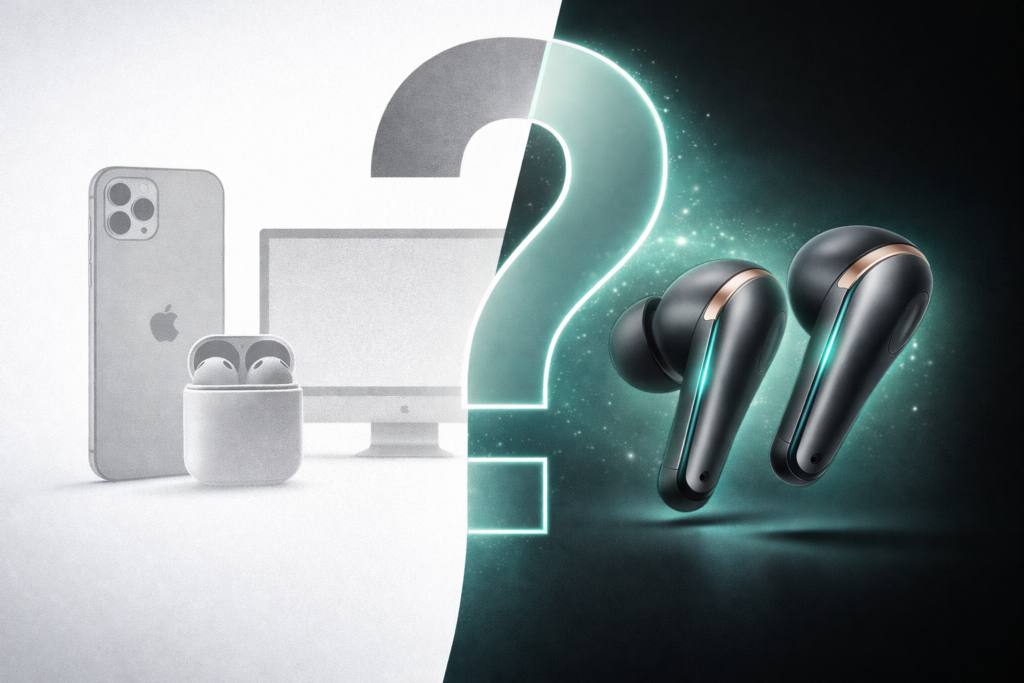
The design comes from LoveFrom, the hardware studio founded by Jony Ive after leaving Apple in 2019. If that name rings a bell, it should — Ive led the design teams behind the iPhone, iPad, MacBook Air, iMac, Apple Watch, and yes, the original AirPods.
OpenAI acquired Ive’s startup “io” in May 2025 for a staggering $6.5 billion. That price tag signals just how serious they are about getting hardware right. When you’ve got the designer behind the most iconic tech products of the past two decades, you’re not treating hardware as an afterthought.
Manufacturing is reportedly being handled by Foxconn, the same company that builds iPhones. If accurate, the combination of Ive’s design legacy and Foxconn’s production expertise could create a solid supply chain.
Technical Specifications and Features
Hardware Specifications
| Component | Reported Details |
|---|---|
| Processor | 2nm custom AI chip (rumored) |
| AI Engine | ChatGPT integration (expected) |
| Processing | Likely hybrid: local AI + cloud |
| Design | Metal form factor (reported) |
| Connectivity | Bluetooth 5.x, possibly Wi-Fi |
| Manufacturer | Foxconn (reported) |
| Battery Life | TBD (estimated 6-8 hours) |
| Charging Case | Magnetic wireless charging (speculated) |
If the rumored 2nm processor is accurate, it would represent smartphone-level computing power packed into something that fits in your ear. This could enable local AI processing — meaning many features might work without sending your voice to the cloud.
Core AI Capabilities
The feature set targets productivity-focused users who want more from their earbuds than music playback:
- Real-Time Translation — Reportedly able to translate conversations across multiple languages in real-time. Exact language support is unconfirmed.
- Meeting Transcription — Expected to offer automatic transcription and AI-generated summaries, though specific capabilities remain unconfirmed.
- Voice Assistant — Likely includes ChatGPT access for questions, reminders, and general assistance.
- Ambient Awareness — May include contextual AI features, though specifics are speculative.
What Can You Actually Do With Them?
Here’s a practical breakdown:
| Use Case | How It Works |
|---|---|
| Ask anything | “What’s the capital of Kazakhstan?” — instant answer |
| Translate conversations | Real-time translation without phone apps |
| Take notes | “Remember to buy milk” — saved automatically |
| Control smart home | “Turn off the living room lights” |
| Get directions | “How do I get to the nearest coffee shop?” |
| Draft messages | “Reply to John saying I’ll be 10 minutes late” |
| Meeting summaries | Automatic AI summary of your calls |
| Calculations | “What’s 15% tip on $84?” |
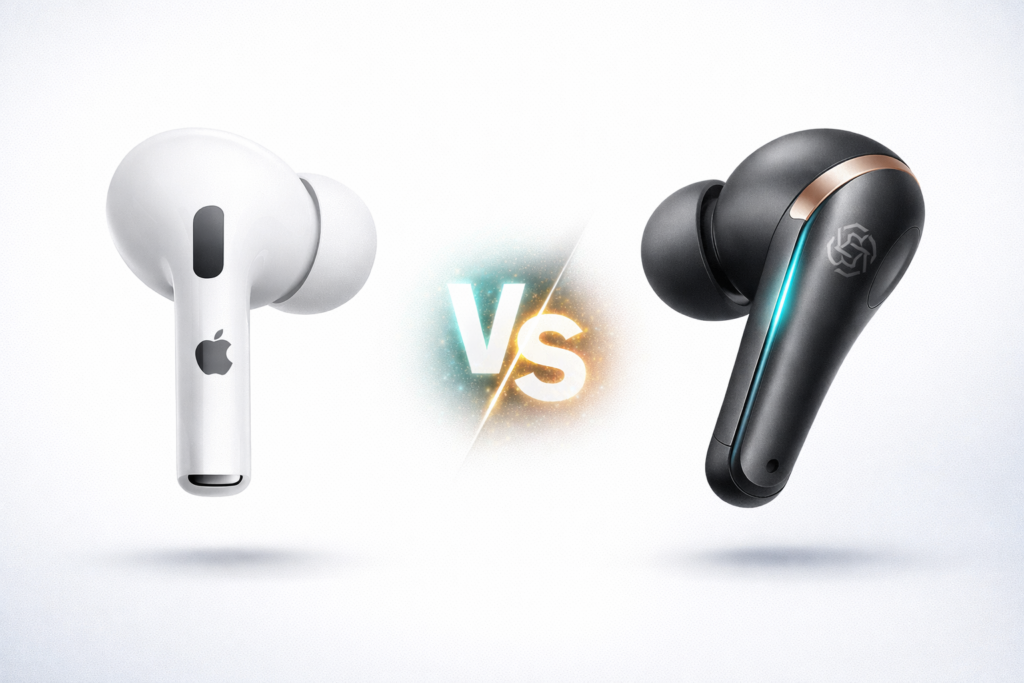
How Do OpenAI Earbuds Compare to AirPods Pro?
This is the question everyone’s asking. Here’s the honest comparison:
| Feature | OpenAI Sweetpea (Rumored) | Apple AirPods Pro 3 | Samsung Galaxy Buds 3 |
|---|---|---|---|
| AI Assistant | ChatGPT (expected) | Siri | Bixby + Galaxy AI |
| On-Device AI | Likely (unconfirmed) | No (cloud-dependent) | Partial |
| Real-Time Translation | Expected | Requires iPhone | Limited |
| Meeting Transcription | Expected | Third-party apps | Third-party apps |
| Voice Commands | Expected advanced NLP | Basic commands | Basic commands |
| Ecosystem Lock-in | Likely cross-platform | Apple only | Samsung optimized |
| Expected Price | $299-$399 (speculated) | $249 | $229 |
| Availability | Late 2026 (rumored) | Now | Now |
When Should You Choose OpenAI Earbuds?
They make sense if you:
- Use ChatGPT regularly and want hands-free access
- Work with international clients (translation)
- Want meeting transcription without extra apps
- Value cross-platform compatibility
- Don’t mind being an early adopter
When Should You Stick With AirPods?
AirPods remain the better choice if you:
- Need earbuds immediately
- Prioritize seamless Apple ecosystem integration
- Want proven, mature technology
- Care more about Active Noise Cancellation than AI features
Release Date and Timeline
OpenAI AI earbuds are expected to be announced late 2026, with mass availability likely in early 2027. Pre-orders may open 2-3 months before shipping begins.
Detailed Timeline
| Milestone | Expected Date | Status |
|---|---|---|
| io Acquisition complete | Early 2025 | Confirmed |
| Prototype development | 2025 | Reported |
| Manufacturing partnership | 2026 | Rumored |
| Beta testing | TBD | Unconfirmed |
| Official announcement | Late 2026 | Speculated |
| Pre-orders open | TBD | Unknown |
| Mass availability | 2027 | Speculated |
Regional Launch Expectations
The rollout will likely follow OpenAI’s typical pattern:
Phase 1 (Late 2026): United States, United Kingdom, Canada, Australia
Phase 2 (Early 2027): Germany, France, Spain, Italy, Japan, South Korea, Singapore
Phase 3 (Mid 2027): India, Brazil, Mexico, Southeast Asia, Middle East
Expected Price and Pricing Tiers
Based on industry speculation, OpenAI AI earbuds may cost somewhere between $299-$399 USD — though no official pricing has been announced. If accurate, this would position them as premium AI wearables competing with AirPods Pro.
Price by Region
| Region | Expected Price |
|---|---|
| United States | $299 – $399 USD |
| United Kingdom | £269 – £359 GBP |
| European Union | €319 – €429 EUR |
| Canada | $399 – $529 CAD |
| Australia | $449 – $599 AUD |
| India | ₹29,999 – ₹39,999 INR |
Expected Tiers
| Tier (Speculated) | Possible Features | Rumored Price |
|---|---|---|
| Standard | Core AI features | ~$299 |
| Pro (if offered) | Extended features | ~$399 |
| Bundle (if offered) | Hardware + subscription | ~$499 |
Note: These tiers are speculative. OpenAI has not confirmed product variants or pricing.
Will the premium pricing be worth it? That depends on whether the AI features genuinely transform your daily workflow. For heavy ChatGPT users, the hands-free convenience could justify the extra cost. For casual users, AirPods Pro at $249 remain a compelling alternative.
Business and Productivity Use Cases

This is where OpenAI earbuds could genuinely differentiate themselves from everything else on the market.
Meeting Transcription and Summaries
Before: Join meeting → Take notes manually → Miss key points → Spend 30 minutes writing summary
After: Join meeting → AI transcribes everything → AI generates summary → Review in 2 minutes
For professionals in 3+ meetings daily, this alone could justify the purchase price.
Real-Time Language Translation
Imagine meeting with an international client who speaks Japanese. Before these earbuds, you’d hire a translator or fumble through a phone app. After: you hear their Japanese, the AI whispers the English translation in your ear. You respond in English, and the AI translates for them.
Potential Productivity Gains (Hypothetical)
| Task | Traditional Method | If AI Earbuds Work as Expected | Potential Savings |
|---|---|---|---|
| Meeting notes | 30 min/meeting | Quick review | Significant |
| Email processing | 45 min/day | Reduced time | Moderate |
| Research questions | 5 min each | Near-instant | High |
| Language translation | Hire translator | Device-based | Cost reduction |
These estimates are hypothetical based on promised features. Actual productivity gains will depend on real-world performance.
Lessons from Failed AI Devices
Before investing in OpenAI earbuds, it’s worth understanding why previous AI hardware devices struggled.
Humane AI Pin (2024)
A screenless AI wearable pinned to your chest. Price: $699 + $24/month subscription.
What went wrong: overheating issues, poor battery life (2-4 hours), slow response times, limited functionality. It was acquired by HP essentially for parts in 2025.
Rabbit R1 (2024)
A standalone AI device with a screen. Price: $199.
What went wrong: overpromised features, most functions still required a smartphone, software bugs plagued the launch. The company continues to struggle.
Why OpenAI Might Succeed Where Others Failed
| Previous Failure Point | OpenAI’s Advantage |
|---|---|
| Overheating | 2nm processor generates less heat |
| Poor battery | Earbuds form factor = better efficiency |
| No user ecosystem | 800 million ChatGPT users already |
| Bad design | Jony Ive team |
| Unproven company | OpenAI market dominance |
| Expensive + subscription | Competitive pricing expected |
The key difference? OpenAI isn’t starting from zero. They already have 800 million weekly ChatGPT users who understand and trust the AI. That’s not a cold start — that’s a built-in market.
How to Pre-Order OpenAI Earbuds
When the time comes, here’s the likely process:
- Create an OpenAI account at openai.com if you don’t have one
- Subscribe to ChatGPT Plus for potential priority access
- Join the official waitlist when announced
- Set price alerts on third-party tracking sites
- Have payment method ready for launch day
- Complete purchase during pre-order window
Tips for early access: ChatGPT Plus subscribers will likely receive priority. Following @OpenAI on X (Twitter) ensures you catch announcements in real-time.
Common Mistakes to Avoid
Buyer Mistakes
Don’t buy third-party “OpenAI earbuds” before official launch. Scams will emerge claiming to sell early units. Only purchase from official OpenAI channels or verified retailers.
Don’t expect iPhone-level polish on day one. First-generation products have bugs. Set realistic expectations.
Don’t ignore subscription costs. Calculate total cost of ownership. Some AI features may require ChatGPT Plus ($20/month) for full capability.
Usage Mistakes
Don’t use in high-security environments without checking policy. Always-on AI may violate workplace security policies.
Don’t rely on AI for critical accuracy. ChatGPT can be wrong. Verify important information independently.
Frequently Asked Questions
When will OpenAI earbuds be available?
OpenAI’s AI earbuds are expected to be announced late 2026 with mass availability in early 2027. The US, UK, Canada, and Australia will likely receive them first, followed by Europe and Asia in subsequent phases.
How much will OpenAI earbuds cost?
The expected price range is $299-$399 USD. A standard tier may retail at $299, while a Pro version with extended features could cost $399. Bundle offers including ChatGPT Plus subscriptions may also be available.
Will OpenAI earbuds work with iPhone?
This is expected, though unconfirmed. Unlike AirPods which are optimized for Apple devices, OpenAI’s earbuds are reportedly designed to work cross-platform with any Bluetooth-compatible smartphone, including iPhone and Android.
Who designed OpenAI earbuds?
Jony Ive and his team at LoveFrom designed the earbuds. Ive is the legendary designer behind Apple’s most iconic products including iPhone, iPad, MacBook Air, iMac, Apple Watch, and AirPods. OpenAI acquired his startup io for $6.5 billion in May 2025.
Can OpenAI earbuds translate languages in real-time?
Real-time translation is expected to be a core feature, though the exact number of supported languages hasn’t been confirmed. If the rumored on-device processing is accurate, translations could be near-instantaneous for major languages.
What is the Sweetpea codename?
“Sweetpea” is the internal codename for OpenAI’s first consumer earbuds. It’s also sometimes referred to as “Dime” internally. The official product name has not been announced and may differ at launch.
Are OpenAI earbuds better than AirPods Pro?
They offer significantly more AI capabilities, including native ChatGPT integration, real-time translation, and meeting transcription. However, AirPods Pro provide tighter Apple ecosystem integration, proven reliability, and are available immediately. The “better” choice depends entirely on your priorities.
Do OpenAI earbuds require a subscription?
Core functionality is expected to work without a subscription. However, advanced AI features may require ChatGPT Plus ($20/month) for full capability. The exact subscription requirements have not been officially confirmed.
What processor powers OpenAI earbuds?
A custom 2nm processor — among the most advanced chip manufacturing nodes currently available. This enables smartphone-level computing power in the earbud form factor, allowing on-device AI processing for privacy and speed.
Conclusion
OpenAI’s entry into consumer hardware represents one of the biggest bets in tech since the smartphone era. With Jony Ive’s design expertise, Foxconn’s manufacturing capability, and 800 million ChatGPT users waiting, they’ve assembled the right pieces.
But uncertainty remains. First-generation hardware carries inherent risks. The AI device graveyard — Humane AI Pin, Rabbit R1, Friend AI — serves as a warning that great concepts don’t always translate to great products.
For now, the smart move is simple: if you need earbuds today, buy AirPods Pro or Galaxy Buds. They work, they’re proven, and they’re available. But if you can wait until late 2026 and you’re genuinely excited about AI-first computing, keep watching OpenAI’s Sweetpea closely.
The future of how we interact with AI might just fit in your ears.

Founder of Jobzhandle.com | Career Strategist & Personal Finance Enthusiast. I help professionals grow their skills, manage their money wisely, and explore new income opportunities. My goal is to turn career and financial goals into reality with simple, proven tips.