

What Are Secondary Sources of Revenue?
Secondary sources of revenue are income streams that supplement your primary paycheck—whether from a full-time job, pension, or main business. Unlike your 9-to-5 salary, these additional earnings come from side hustles, investments, freelance work, or passive income ventures.
In simple terms: it’s money you earn outside your regular job.
According to a 2024 Bankrate survey, 39% of American adults now have a side hustle, generating an average of $891 per month in extra income. That’s over $10,000 annually—enough to max out a Roth IRA, build an emergency fund, or pay off debt faster.
Types of Secondary Revenue Streams
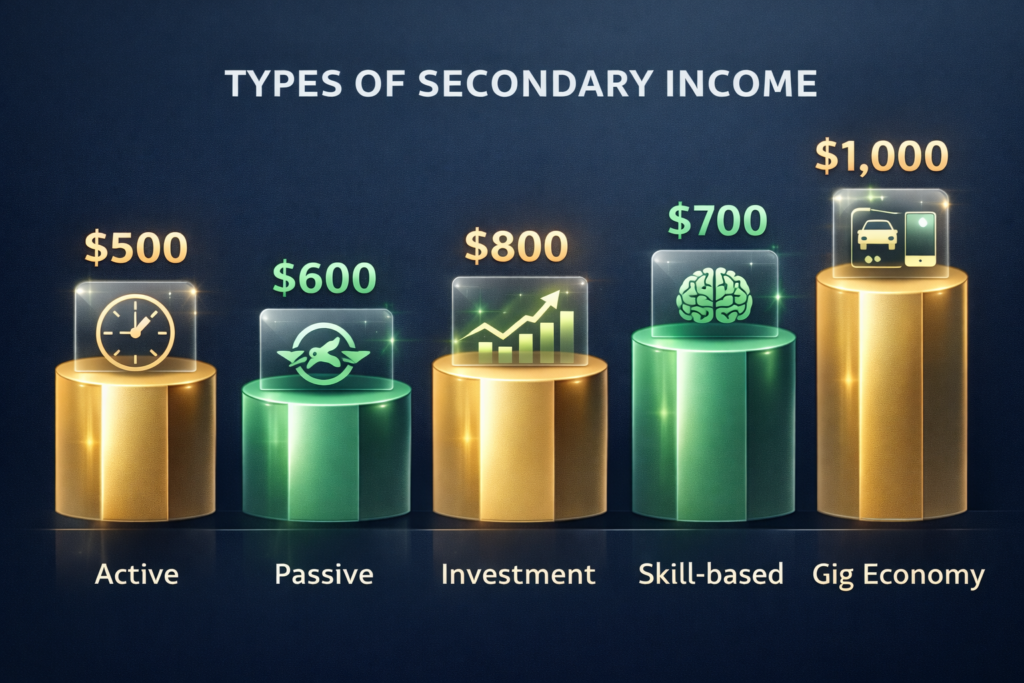
| Type | Description | Example | Time Investment |
|---|---|---|---|
| Active Income | Trade time for money | Freelancing, tutoring, gig work | 5-20 hrs/week |
| Passive Income | Earn with minimal ongoing effort | Dividends, rental income, royalties | 1-5 hrs/week (after setup) |
| Semi-Passive Income | Initial effort, then reduced maintenance | Digital products, affiliate marketing | Variable |
| Investment Income | Money working for you | Stocks, bonds, REITs, savings interest | 1-2 hrs/month |
Why Americans Need Multiple Income Streams in 2026
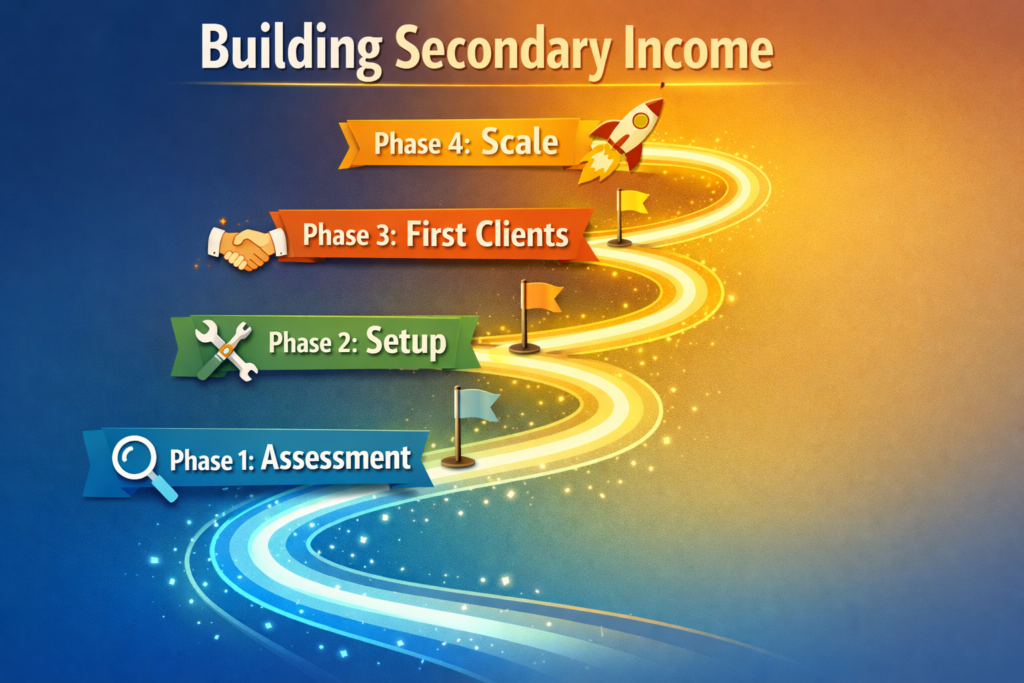
The traditional model of relying on a single employer for financial security is increasingly risky in 2026. Here’s why smart Americans are building secondary revenue sources:
Economic Reality Check
- Inflation Impact: The cumulative inflation since 2020 has eroded purchasing power by approximately 20% (Bureau of Labor Statistics)
- Job Market Volatility: Tech layoffs in 2023-2024 affected over 260,000 workers at major companies
- Wage Stagnation: Real wages have barely kept pace with inflation for most middle-class workers
- Rising Costs: Housing, healthcare, and education costs continue outpacing income growth
The Financial Security Equation
“If you depend on a single income source, you’re one layoff away from a financial crisis.”
— Dave Ramsey, Personal Finance Expert
The average American household needs $5,000-$7,000 monthly to maintain a comfortable lifestyle in most major cities. With median household income around $74,580 (2023), that leaves little room for savings, emergencies, or wealth building.
Secondary income bridges this gap.
Top 15 Secondary Revenue Sources for Beginners
Low-Investment Options ($0-$100)
These require minimal upfront costs—perfect for beginners testing the waters.
1. Freelance Writing & Content Creation
Earning Potential: $25-$150 per article (beginners) → $250-$1,000+ (experienced)
Freelance writing remains one of the most accessible secondary income sources in 2026. With AI-assisted tools making research easier (not replacing writers), demand for human-quality content has actually increased.
Where to Start:
- Platforms: Contently, Medium Partner Program, Upwork, Fiverr
- Niches paying $100+/article: Finance, healthcare, technology, B2B SaaS
- Quick win: Start a Medium blog—top writers earn $5,000-$50,000/month
Realistic Timeline: First paid article within 2-4 weeks with consistent effort.
Startup Cost: $0 (just need a computer and internet)
2. Online Surveys & Microtasks
Earning Potential: $50-$300/month
While not a path to riches, survey sites provide easy, flexible income for beginners. Best used during downtime (commutes, TV time, waiting rooms).
Legitimate Platforms:
| Platform | Avg. Earning | Payment Method | Best For |
|---|---|---|---|
| Swagbucks | $1-$5/day | PayPal, Gift Cards | Beginners |
| Prolific | $8-$15/hour | PayPal | Academic studies |
| UserTesting | $10-$60/test | PayPal | Website testing |
| Amazon MTurk | Variable | Amazon Payments | Microtasks |
Pro Tip: Focus on Prolific and UserTesting—they pay significantly more per hour than traditional surveys.
Startup Cost: $0
3. Reselling & Retail Arbitrage
Earning Potential: $500-$3,000+/month
Buy low, sell high. It’s a simple concept that generates real income for thousands of Americans.
How It Works:
- Find discounted items at thrift stores, garage sales, clearance sections, or liquidation pallets
- List and sell on eBay, Poshmark, Mercari, Facebook Marketplace, or Amazon FBA
- Pocket the profit margin (typically 30-100%+ ROI)
Best Categories for Beginners:
- Used books (textbooks are gold)
- Brand-name clothing (Nike, Lululemon, North Face)
- Vintage items & collectibles
- Electronics (tested/working)
- LEGO sets (sealed boxes appreciate)
Real Example: A seller on r/Flipping reported earning $2,400/month selling thrift store finds on eBay—working only 15 hours/week.
Startup Cost: $50-$100 (initial inventory)
4. Delivery & Gig Economy Work

Earning Potential: $15-$35/hour (varies by market)
The gig economy offers immediate income with flexible hours—ideal for building secondary revenue while maintaining a full-time job.
Top Platforms by Category:
Food Delivery:
- DoorDash — Largest market share, consistent orders
- Uber Eats — Good surge pricing
- Grubhub — Better tips in some markets
- Instacart — Grocery delivery, higher per-order earnings
Rideshare:
Other Gig Work:
- TaskRabbit — Handyman, moving, assembly ($25-$75/hour)
- Rover — Pet sitting/walking ($15-$50/day)
- Amazon Flex — Package delivery ($18-$25/hour)
Realistic Earnings (20 hours/week):
| City | DoorDash Avg/Week | Uber Avg/Week |
|---|---|---|
| New York City | $450-$600 | $500-$700 |
| Los Angeles | $400-$550 | $450-$600 |
| Chicago | $350-$500 | $400-$550 |
| Houston | $300-$450 | $350-$500 |
| Phoenix | $280-$400 | $320-$450 |
Startup Cost: $0 (if you already have a car/bike)
5. Virtual Assistant Services
Earning Potential: $15-$50/hour
Small business owners and entrepreneurs desperately need help with administrative tasks. As a virtual assistant (VA), you provide remote support—no special degree required.
Common VA Tasks:
- Email management
- Social media scheduling
- Calendar coordination
- Data entry
- Customer service responses
- Travel booking
- Basic bookkeeping
Where to Find Clients:
- Belay — Premium VA agency
- Time Etc — Established platform
- Upwork — Freelance marketplace
- Direct outreach to local small businesses (often best pay)
Earning Example: Entry-level VAs on Belay start at $17-$20/hour, with experienced VAs earning $25-$50/hour for specialized skills (bookkeeping, executive assistance).
Startup Cost: $0-$50 (for any software subscriptions)
Medium-Investment Options ($100-$500)
These require some upfront investment but offer higher income potential.
6. Print-on-Demand Business
Earning Potential: $200-$5,000+/month
Create custom designs for t-shirts, mugs, phone cases, and more—without holding any inventory. When someone buys, the POD company prints and ships for you.
How It Works:
- Create designs using Canva (free) or Adobe Illustrator
- Upload to POD platforms
- They handle production, shipping, customer service
- You keep the profit margin (typically $5-$20 per item)
Best POD Platforms:
| Platform | Best For | Profit Margin | Startup Cost |
|---|---|---|---|
| Printful | Quality products | 20-30% | Free |
| Printify | Lowest prices | 25-40% | Free |
| Merch by Amazon | Amazon traffic | 10-25% | Free (invite-only) |
| Redbubble | Artists/designers | 10-20% | Free |
| Teespring/Spring | Influencers | 20-35% | Free |
Success Example: A designer on r/Entrepreneur shared earning $3,200/month from 47 Merch by Amazon designs—after 8 months of consistent uploading.
Startup Cost: $0-$200 (design software, optional ads)
7. High-Yield Savings & CD Laddering
Earning Potential: $500-$5,000+/year (depending on capital)
Not glamorous, but guaranteed returns with zero effort after setup. With current rates, this is the safest secondary income available.
Current Top High-Yield Savings Rates (December 2026):
| Bank | APY | Minimum | FDIC Insured |
|---|---|---|---|
| Marcus by Goldman Sachs | 4.50% | $0 | Yes |
| Ally Bank | 4.25% | $0 | Yes |
| Discover Bank | 4.30% | $0 | Yes |
| SoFi | 4.60% | $0 | Yes |
| Wealthfront | 4.50% | $0 | Yes |
Real Math Example:
- $10,000 in HY Savings at 4.50% APY = $450/year (completely passive)
- $50,000 across accounts = $2,250/year
CD Laddering Strategy:
Build a “ladder” of CDs maturing at different intervals for both security and flexibility:
- 3-month CD: 4.40% APY
- 6-month CD: 4.60% APY
- 12-month CD: 4.75% APY
Startup Cost: Whatever you can save (even $100 starts earning)
8. Stock Dividends & REITs
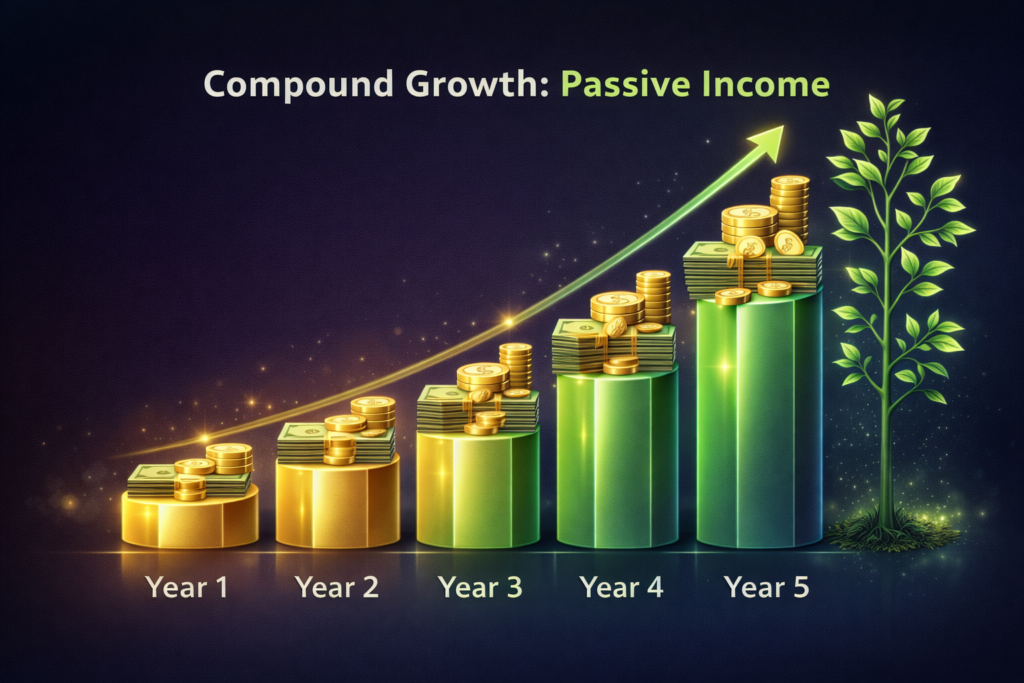
Earning Potential: 3-10% annual yield on invested capital
Invest in dividend-paying stocks or Real Estate Investment Trusts (REITs) to generate quarterly/monthly passive income.
Beginner-Friendly Dividend Investments:
| Investment Type | Example | Dividend Yield | Risk Level |
|---|---|---|---|
| Dividend ETFs | VYM, SCHD, DGRO | 2.5-4% | Low-Medium |
| REITs | O (Realty Income), STAG | 4-7% | Medium |
| Dividend Aristocrats | KO, JNJ, PG | 2-3.5% | Low |
| High-Yield Bonds | BND, HYG | 4-6% | Low-Medium |
Real Income Example:
- $20,000 invested in SCHD (3.5% yield) = $700/year in dividends
- Reinvesting dividends compounds growth over time
Best Platforms for Beginners:
- Fidelity — No minimums, great research
- Charles Schwab — Commission-free trading
- M1 Finance — Automated “pie” investing
- Robinhood — Simple interface (be careful with options)
Startup Cost: Minimum $100-$500 to see meaningful returns
Disclaimer: All investments carry risk. Past performance doesn’t guarantee future results. Consider consulting a financial advisor before investing.
9. Online Course Creation
Earning Potential: $500-$50,000+/year
Package your expertise into a digital course and sell it repeatedly. This is the ultimate semi-passive income once created.
Profitable Course Niches in 2026:
- Software skills (Excel, Notion, Figma, no-code tools)
- Career development (resume writing, interview prep, LinkedIn optimization)
- Creative skills (photography, video editing, graphic design)
- Health & wellness (yoga, meal prep, fitness routines)
- Financial literacy (budgeting, investing basics, credit repair)
Best Platforms:
| Platform | Pricing Model | Best For |
|---|---|---|
| Teachable | Monthly fee | Full control |
| Udemy | Revenue share | Built-in audience |
| Skillshare | Per-minute watched | Creative topics |
| Gumroad | Transaction fee | Simple setup |
| Kajabi | Premium pricing | All-in-one business |
Realistic Timeline: 4-8 weeks to create a quality course; first sales within 1-3 months with marketing.
Startup Cost: $0-$300 (platform fees, basic equipment)
10. Affiliate Marketing
Earning Potential: $100-$10,000+/month
Recommend products/services and earn a commission when people purchase through your unique link.
High-Paying Affiliate Programs:
| Program | Commission | Cookie Duration | Niche |
|---|---|---|---|
| Amazon Associates | 1-10% | 24 hours | Everything |
| ShareASale | Varies | 30-90 days | Multiple brands |
| PartnerStack | 15-50% | 30-90 days | SaaS products |
| Bluehost | $65-$130/sale | 90 days | Web hosting |
| ConvertKit | 30% recurring | 60 days | Email marketing |
Best Channels for Affiliate Marketing:
- Blog/Website — Long-term SEO traffic
- YouTube — Product reviews, tutorials
- Pinterest — Visual products, lifestyle content
- Email Newsletter — High conversion rates
- TikTok/Instagram — Quick product showcases
Success Example: Pat Flynn (Smart Passive Income) earned $50,000+/month from affiliate marketing at his peak—though beginners typically start with $100-$500/month in the first year.
Startup Cost: $0-$200 (domain, hosting if building a blog)
Skill-Based Revenue Streams
Higher income potential if you have (or can develop) specific skills.
11. Freelance Web Development
Earning Potential: $50-$200/hour
Web developers remain in high demand in 2026. Even basic WordPress or Shopify skills command premium rates.
In-Demand Skills & Rates:
| Skill | Beginner Rate | Experienced Rate |
|---|---|---|
| WordPress Development | $30-$50/hr | $75-$150/hr |
| Shopify Development | $40-$60/hr | $100-$200/hr |
| React/Next.js | $50-$80/hr | $150-$250/hr |
| No-Code (Webflow, Bubble) | $35-$60/hr | $80-$150/hr |
Where to Find Clients:
- Toptal — Premium clients (competitive entry)
- Upwork — Volume of projects
- Codeable — WordPress-specific
- Local businesses — Often willing to pay more for personal service
Learning Resources:
- freeCodeCamp — Free comprehensive curriculum
- The Odin Project — Project-based learning
- Codecademy — Structured courses
Startup Cost: $0-$100 (learning is free; may need hosting for portfolio)
12. Online Tutoring & Teaching
Earning Potential: $20-$100+/hour
If you have expertise in any subject, someone will pay to learn it from you.
Top Tutoring Platforms:
| Platform | Subject | Hourly Rate | Requirements |
|---|---|---|---|
| Wyzant | All subjects | $25-$80/hr | Background check |
| Tutor.com | Academic | $15-$25/hr | Degree required |
| VIPKid | English | $14-$22/hr | Bachelor’s degree |
| Cambly | English | $10-$12/hr | Native speaker |
| Preply | Languages | $15-$50/hr | Set your own rate |
| Varsity Tutors | Test prep | $20-$40/hr | Subject expertise |
Private Tutoring (Higher Rates):
- SAT/ACT prep: $50-$150/hour
- GMAT/GRE/LSAT: $75-$200/hour
- College admissions consulting: $100-$300/hour
- Executive coaching: $150-$500/hour
Startup Cost: $0
13. Social Media Management
Earning Potential: $500-$5,000/month per client
Small businesses know they need social media but lack time/expertise. Enter you.
Services to Offer:
- Content creation & scheduling
- Engagement management (responding to comments/DMs)
- Growth strategy
- Paid advertising management
- Analytics & reporting
Typical Pricing:
| Service Level | Monthly Retainer | Platforms Managed |
|---|---|---|
| Basic | $300-$500 | 1-2 platforms |
| Standard | $750-$1,500 | 3-4 platforms |
| Premium | $2,000-$5,000+ | Full management + ads |
How to Land Clients:
- Build your own social presence first (proof of competence)
- Create case studies (even volunteer for a local nonprofit)
- Cold outreach to local businesses with weak social presence
- Use Upwork or LinkedIn for initial clients
Startup Cost: $0-$100 (scheduling tools like Buffer or Later)
14. AI-Powered Services
Earning Potential: $100-$500+/hour
The hottest skill market of 2026. Businesses need help leveraging AI tools—and will pay premium rates.
High-Demand AI Services:
| Service | Typical Rate | Skills Needed |
|---|---|---|
| Prompt Engineering | $100-$300/hr | Understanding LLMs |
| AI Workflow Automation | $75-$200/hr | Zapier, Make, Python |
| AI Content Optimization | $50-$150/hr | Writing + AI tools |
| Custom GPT Development | $500-$5,000/project | OpenAI API knowledge |
| AI Training & Consulting | $150-$500/hr | Deep AI expertise |
How to Get Started:
- Master tools like ChatGPT, Claude, Midjourney, RunwayML
- Learn prompt engineering through free courses
- Build case studies automating your own workflows
- Position yourself on LinkedIn as an “AI Implementation Specialist”
Free Learning Resources:
- DeepLearning.AI — Andrew Ng’s courses
- Coursera AI Courses
- OpenAI Documentation
Startup Cost: $20-$100/month (API credits, tool subscriptions)
15. Consulting & Coaching
Earning Potential: $100-$1,000+/hour
If you have 10,000 hours in any field, you’re an expert. People will pay for your guidance.
Consulting Niches with Strong Demand:
- Career transition coaching
- Small business operations
- Marketing strategy
- Financial planning (requires certifications)
- HR/hiring processes
- Industry-specific expertise
Pricing Models:
| Model | Entry Level | Experienced |
|---|---|---|
| Hourly Calls | $75-$150 | $300-$1,000+ |
| Monthly Retainer | $500-$1,500 | $3,000-$10,000+ |
| Day Rate | $500-$1,000 | $2,000-$10,000 |
| Course/Group Coaching | $200-$500 | $1,000-$5,000+ |
Building Your Consulting Practice:
- Define your specific expertise (narrow beats broad)
- Create thought leadership content (LinkedIn posts, blog, videos)
- Offer free 15-minute “strategy calls” to build pipeline
- Collect testimonials aggressively
- Raise prices as demand increases
Startup Cost: $0-$200 (website, booking software)
How Much Can You Really Earn?
Let’s get realistic. Most beginners won’t make $10,000/month immediately. Here’s what to actually expect:
Realistic First-Year Earnings by Revenue Stream
| Revenue Stream | Month 1-3 | Month 4-6 | Month 7-12 | Year 1 Total |
|---|---|---|---|---|
| Freelance Writing | $0-$200 | $300-$800 | $500-$1,500 | $3,000-$8,000 |
| Gig Economy | $200-$500 | $400-$800 | $500-$1,000 | $5,000-$10,000 |
| Reselling | $100-$300 | $300-$700 | $500-$1,500 | $4,000-$12,000 |
| Print-on-Demand | $0-$50 | $50-$200 | $200-$500 | $1,000-$5,000 |
| Dividends ($10K invested) | $75 | $75 | $150 | $450 |
| Online Tutoring | $200-$400 | $400-$800 | $600-$1,200 | $5,000-$12,000 |
| Social Media Management | $0-$500 | $500-$1,500 | $1,000-$3,000 | $6,000-$20,000 |
The Compound Effect of Multiple Streams
| Scenario | Monthly Income | Annual Income |
|---|---|---|
| 1 side hustle (freelancing) | $500 | $6,000 |
| 2 streams (freelancing + dividends) | $700 | $8,400 |
| 3 streams (+ gig work weekends) | $1,200 | $14,400 |
| 4+ diversified streams | $2,000+ | $24,000+ |
Step-by-Step Guide to Starting Your First Secondary Income
Week 1: Assessment & Selection
Day 1-2: Skills Audit
- List every skill you have (professional, hobbies, life experience)
- Rate each: 1-10 proficiency, 1-10 enjoyment
- Research market demand for top skills
Day 3-4: Time Audit
- Calculate realistic hours available per week
- Identify: mornings, evenings, weekends availability
- Consider energy levels (high-focus vs. low-energy tasks)
Day 5-7: Match & Select
- Match skills + time + income goals
- Choose ONE revenue stream to start (don’t spread thin)
- Research specific platforms, rates, requirements
Week 2: Setup & Preparation
Day 8-10: Platform Setup
- Create accounts on chosen platforms
- Complete profiles 100% (photos, descriptions, skills)
- Study top performers for optimization tips
Day 11-14: Portfolio/Proof Building
- Create 2-3 sample works (even unpaid)
- Collect any existing testimonials/references
- Set up basic systems (invoicing, scheduling)
Week 3-4: First Clients & Iteration
Week 3: Active Outreach
- Apply to 10+ opportunities daily
- Customize each application
- Follow up on non-responses
Week 4: Deliver & Learn
- Complete first paid work with excellence
- Request reviews/testimonials immediately
- Analyze what worked, what didn’t
- Adjust pricing/positioning based on feedback
Month 2+: Scale & Optimize
- Raise prices after every 3-5 completed projects
- Build referral systems
- Consider adding a second complementary revenue stream
- Reinvest some earnings into growth (tools, education, ads)
Common Mistakes Beginners Make
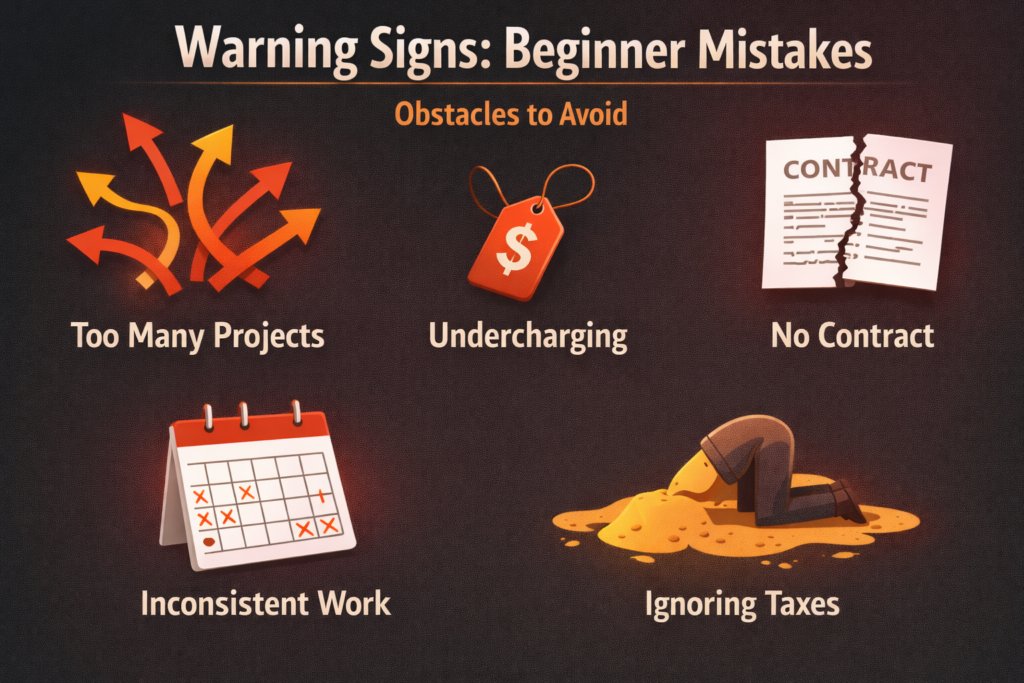
❌ Mistake 1: Starting Too Many Things at Once
The Problem: You divide attention across 5 platforms, master none, and quit after 2 months with no results.
The Solution: Pick ONE secondary income source. Give it 90 days of focused effort before adding another.
❌ Mistake 2: Undercharging Your Services
The Problem: Pricing at $10/hour when the market pays $50/hour. You burn out and resent the work.
The Solution: Research market rates. Start at 75-80% of average, then increase with each successful project. Low prices actually repel quality clients.
❌ Mistake 3: No Written Agreements
The Problem: Scope creep, payment disputes, client saying “that’s not what I asked for.”
The Solution: Even for small projects, send a simple written agreement covering:
- Scope of work
- Timeline
- Payment terms
- Revision limits
❌ Mistake 4: Ignoring Taxes Until April
The Problem: Surprise $3,000 tax bill you can’t afford.
The Solution: Set aside 25-30% of all secondary income for taxes immediately. Open a separate savings account just for this.
❌ Mistake 5: Treating It Like a Hobby
The Problem: Working “when you feel like it” leads to inconsistent income and eventually quitting.
The Solution: Schedule specific hours. Treat it like a second job—because it is.
Tax Implications for Secondary Income in USA
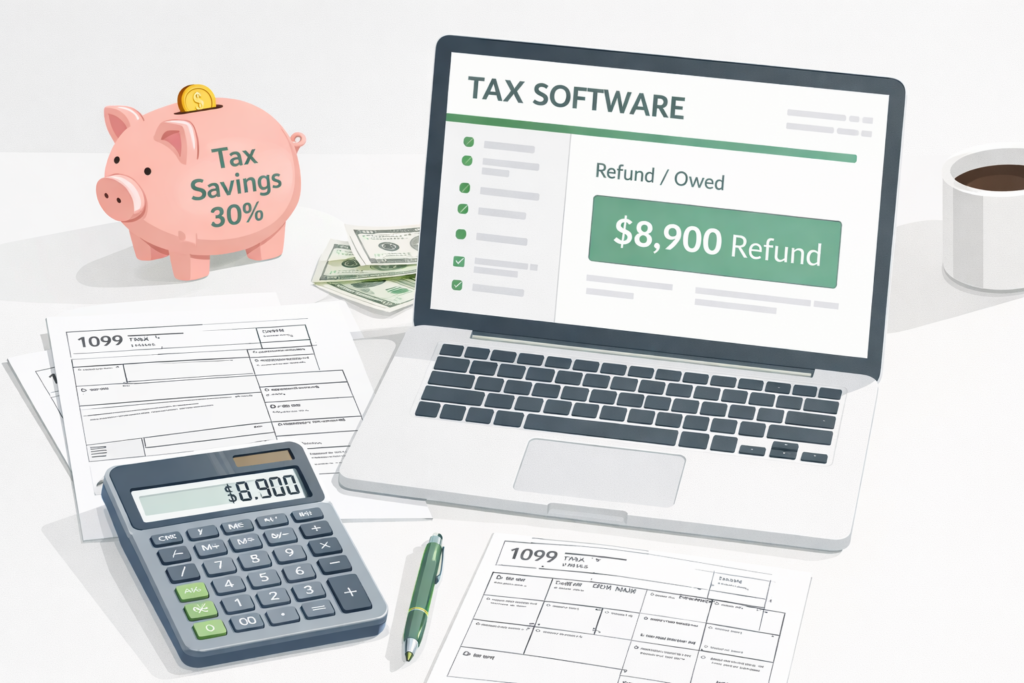
Understanding taxes prevents unpleasant surprises. Here’s what every American earning secondary income must know:
Self-Employment Tax Threshold
- $400+ in self-employment income: You must file Schedule SE and pay self-employment tax (15.3%)
- This covers Social Security (12.4%) and Medicare (2.9%)
Key Tax Forms You’ll Need
| Form | Purpose | When You’ll Need It |
|---|---|---|
| 1099-NEC | Freelance/contractor income $600+ | Received from clients |
| Schedule C | Profit/loss from self-employment | Filing annual taxes |
| Schedule SE | Self-employment tax calculation | If SE income >$400 |
| 1099-K | Payment platform income $600+ | From PayPal, Venmo, etc. |
| 1099-DIV | Dividend income | From investments |
Deductible Expenses
Reduce your tax burden by deducting legitimate business expenses:
- Home office (percentage of rent/mortgage, utilities)
- Internet and phone (business-use percentage)
- Equipment (computer, camera, software)
- Professional development (courses, books, conferences)
- Marketing (ads, website hosting, business cards)
- Mileage for business travel ($0.67/mile in 2026)
- Health insurance premiums (if self-employed)
Quarterly Estimated Taxes
If you expect to owe $1,000+ in taxes from secondary income, you must pay quarterly:
- Q1: April 15
- Q2: June 15
- Q3: September 15
- Q4: January 15 (following year)
Pro Tip: Use IRS Direct Pay to submit quarterly payments easily.
Best Cities for Secondary Income Opportunities
While many secondary income sources are location-independent, some markets offer better opportunities:
Top 10 Cities for Gig Economy & Side Hustles
| Rank | City | Best For | Avg. Side Hustle Income |
|---|---|---|---|
| 1 | New York City, NY | Freelancing, tutoring, consulting | $1,200/month |
| 2 | San Francisco, CA | Tech gigs, AI services | $1,500/month |
| 3 | Los Angeles, CA | Creative services, influencing | $1,100/month |
| 4 | Seattle, WA | Tech freelancing, Amazon Flex | $1,050/month |
| 5 | Austin, TX | Gig economy, no state income tax | $950/month |
| 6 | Chicago, IL | Tutoring, delivery services | $900/month |
| 7 | Boston, MA | Academic tutoring, consulting | $1,000/month |
| 8 | Denver, CO | Outdoor services, gig work | $850/month |
| 9 | Miami, FL | No state tax, tourism gigs | $800/month |
| 10 | Dallas, TX | Delivery, no state income tax | $850/month |
Cities with No State Income Tax (Keep More Earnings)
Your secondary income goes further in these states:
- Texas: Houston, Dallas, Austin, San Antonio
- Florida: Miami, Orlando, Tampa, Jacksonville
- Nevada: Las Vegas, Reno
- Washington: Seattle, Tacoma (no income tax but has B&O tax for some businesses)
- Tennessee: Nashville, Memphis
FAQs
How much money can I realistically make from secondary income sources as a beginner?
Most beginners earn $200-$800/month in their first 3-6 months from a single secondary income source. With consistency, this typically grows to $1,000-$2,500/month within the first year. The key factors are: time invested, chosen income stream, skill level, and market demand.
What is the easiest secondary source of revenue to start with no experience?
Survey sites and gig economy work (DoorDash, Instacart) have the lowest barrier to entry—you can start earning within 24-48 hours. For higher long-term income, freelancing on Upwork or reselling on eBay are beginner-friendly with better scaling potential.
Do I need to pay taxes on secondary income in the United States?
Yes. All income is taxable. If you earn $400 or more from self-employment in a year, you must report it and pay self-employment tax (15.3%). Set aside 25-30% of earnings for taxes and consider making quarterly estimated tax payments to avoid penalties.
Can I build secondary income while working a full-time job?
Absolutely. 39% of American side hustlers maintain full-time employment. Most successful side hustlers dedicate 10-20 hours per week to their secondary income. The key is choosing flexible income streams (freelancing, digital products, investments) that don’t conflict with your job’s schedule or non-compete agreements.
What’s the difference between passive income and secondary income?
Secondary income is any additional income beyond your primary source—it can be active (freelancing) or passive (dividends). Passive income specifically refers to earnings requiring minimal ongoing effort after initial setup (rental income, royalties, dividend stocks). Most “passive” income sources require significant upfront work.
Which secondary income sources work best for introverts?
Introverts often thrive with: freelance writing, web development, print-on-demand, affiliate marketing, stock/dividend investing, online course creation, and data entry/transcription. These minimize client calls and in-person interaction while still generating strong income.
How long does it take to replace my salary with secondary income?
For most people, 2-5 years of consistent effort to replace a median US salary ($50,000-$75,000). Some high-demand skills (AI services, software development, consulting) can accelerate this to 1-2 years. The timeline depends heavily on: hours invested, income stream selection, market demand, and reinvestment of earnings.
What tools do I need to manage multiple income streams?
Essential tools include:
- Banking: Separate business checking account
- Invoicing: Wave (free), FreshBooks, or QuickBooks
- Time tracking: Toggl (free) or Harvest
- Project management: Notion, Trello, or Asana
- Tax prep: Set aside 25-30% in dedicated savings; use TurboTax Self-Employed or work with a CPA
Is it worth building secondary income in 2026 with AI taking over jobs?
More than ever. AI is creating new income opportunities (prompt engineering, AI consulting) while making some tasks more efficient (AI-assisted writing, automated workflows). The winners are those who learn to leverage AI tools—not compete against them. Diversified income also protects against job displacement.
What’s the best secondary income for someone with a 9-5 office job?
Evening/weekend-friendly options: freelance writing or design (set your own hours), dividend investing (completely passive), online tutoring (evening slots available), print-on-demand (create designs on your schedule), and social media management (can batch content on weekends).
Final Thoughts
Building secondary sources of revenue isn’t about working yourself to exhaustion—it’s about creating financial resilience in an uncertain economic landscape.
In 2026, the average American with just one income source faces:
- Greater vulnerability to layoffs
- Limited ability to build wealth
- Stress from living paycheck to paycheck
- No runway to pursue opportunities
Meanwhile, those with diversified income streams enjoy:
- Financial security even during market downturns
- Faster wealth accumulation
- Freedom to take career risks
- Peace of mind
The 15 secondary revenue sources outlined in this guide range from zero-cost options (surveys, freelancing, gig work) to investment-based income (dividends, REITs) to skill-based services (consulting, web development, AI implementation).
Your next steps:
- ✅ Pick ONE income stream that matches your skills, time, and interests
- ✅ Set a specific goal (e.g., “$500/month within 90 days”)
- ✅ Block 10 hours/week minimum on your calendar
- ✅ Take action today—create your first profile, apply to your first gig, or open a high-yield savings account
- ✅ Track progress and iterate
The best time to build secondary income was 5 years ago. The second-best time is right now.
Start small. Stay consistent. Let compound growth—in skills, reputation, and earnings—do the heavy lifting.
Share This Guide
📌 Found this helpful? Share it with someone who’s looking to boost their income in 2026.
💬 What secondary income source are you most interested in starting? Drop a comment below!
Related Articles
- How to Choose the Right Freelance Services in 2026
- Best Remote Work Opportunities for Extra Income in 2026
- Easy Side Hustles to Make Extra Cash for Holidays (2026 Edition)

Founder of Jobzhandle.com | Career Strategist & Personal Finance Enthusiast. I help professionals grow their skills, manage their money wisely, and explore new income opportunities. My goal is to turn career and financial goals into reality with simple, proven tips.
2 thoughts on “15 Best Secondary Sources of Revenue for Beginners in USA 2026”