
Why Daily Money Habits Matter for Building Wealth

Building wealth doesn’t require luck, inheritance, or a six-figure salary. In most cases, it comes from small, consistent habits—repeated every day with intention. If you’ve ever thought financial freedom was out of reach, it’s time to rethink what wealth-building really looks like in 2026.
Here’s the truth: wealth isn’t just about how much you earn. It’s about how you manage what you have. Whether your goal is long-term financial security, the ability to retire comfortably, or just having more breathing room each month, your daily money habits can make all the difference.
Retirement planning and financial literacy are no longer optional—they’re essential skills for anyone serious about their financial future. The good news? You can grow savings, reduce financial stress, and build wealth step by step without making drastic changes to your lifestyle.
In this comprehensive guide, we’ll explore 10 proven daily habits that can transform your financial life. These aren’t complicated strategies reserved for financial experts—they’re practical, actionable money habits anyone can start implementing today.
1. Make Saving a Non-Negotiable Bill
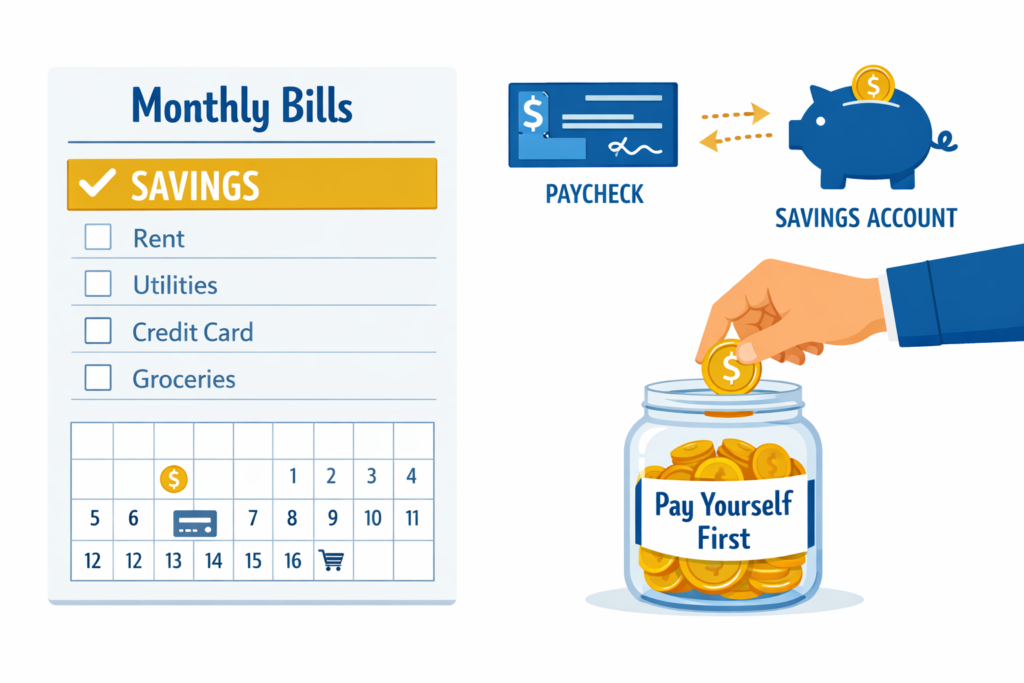
The first and most powerful money habit you can develop is treating your savings like a bill. Before paying rent, buying groceries, or dining out, you should always pay yourself first.
How to Implement This Habit
Set up an automatic transfer to your savings account each payday. Even $25 a week can add up fast—that’s over $1,300 per year without even thinking about it. The key to building momentum isn’t the amount; it’s the consistency.
This simple shift in how you treat savings can turn short-term discipline into long-term freedom. When you automate your savings, you remove the temptation to spend that money on impulse purchases.
Pro Tip: Start small if you need to. Even $10 per paycheck is better than nothing. The habit of saving is more important than the amount when you’re just getting started.
2. Check In with Your Money Regularly
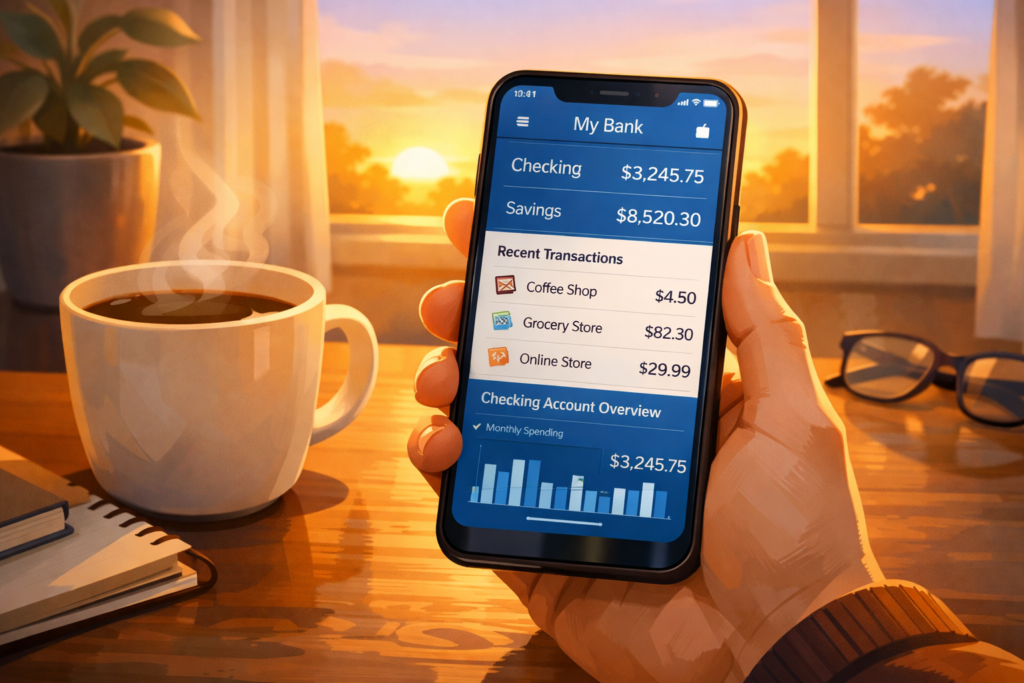
One of the most overlooked money habits? Awareness. Many people avoid looking at their bank accounts because they’re afraid of what they’ll find—but this habit of avoidance can be costly.
Build the Awareness Habit
Make it a habit to log into your bank accounts a few times a week. Know your balances. Track your recent purchases. Review what’s coming in and what’s going out.
This kind of visibility helps you:
- Avoid overdraft fees
- Catch errors early
- Make better financial decisions on the fly
When you’re in tune with your finances, you’re in control. This awareness becomes the foundation for all your other good money habits.
Daily Practice: Add checking your account activity to your morning routine—maybe right after you check email and before you start cruising social media. Review yesterday’s spending and reset your money mindset for the day ahead.
3. Automate Good Financial Choices

Here’s a truth about human nature: willpower can fade, but systems stick. If you rely solely on motivation to make good financial decisions, you’ll eventually slip up.
Set Up Your Automation System
Set up automatic bill pay, recurring transfers to savings or retirement accounts, and debt payments. When you automate your good financial decisions, they happen without effort—or excuses.
Automation protects you from:
- Late fees
- Missed opportunities
- Financial backsliding
Let technology help you stay on track. Consider automating payments to your:
- Emergency fund
- Retirement account
- Investment accounts
- Student loan servicers
- Insurance companies
Many billers offer discounts if you set up autopay, so you might even save money while building better habits.
Warning: If you’re living paycheck to paycheck, be cautious to avoid accidental overdrafts. Set up low-balance alerts on your checking account to stay informed.
4. Redirect Extra Income Toward Your Goals
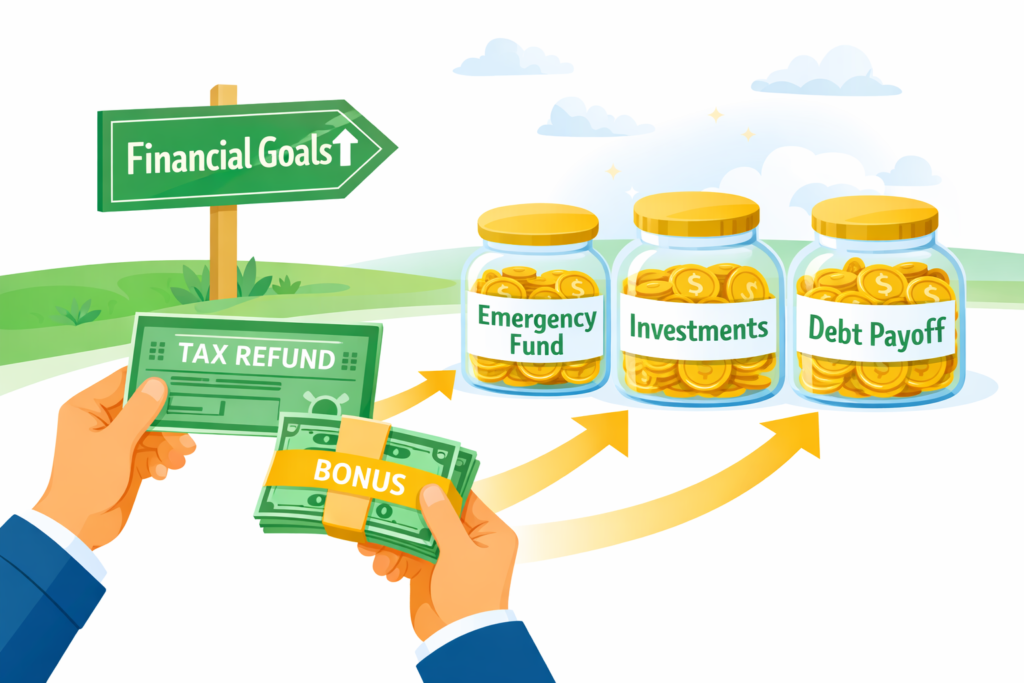
Tax refunds, bonuses, cash gifts—this is your “found money.” Instead of spending it on things you won’t remember in a week, use it to strengthen your financial future.
Smart Ways to Use Windfalls
When you receive extra income, consider these options:
- Add it to your emergency fund
- Make an extra loan payment
- Invest it in tax-advantaged accounts
These windfalls are powerful tools when used intentionally—and they can fast-track your financial goals significantly.
The 50/50 Rule: If you receive a bonus or tax refund, consider splitting it: 50% toward your financial goals and 50% for something enjoyable. This balance helps you stay committed to wealth-building without feeling deprived.
5. Eliminate Unnecessary Fees
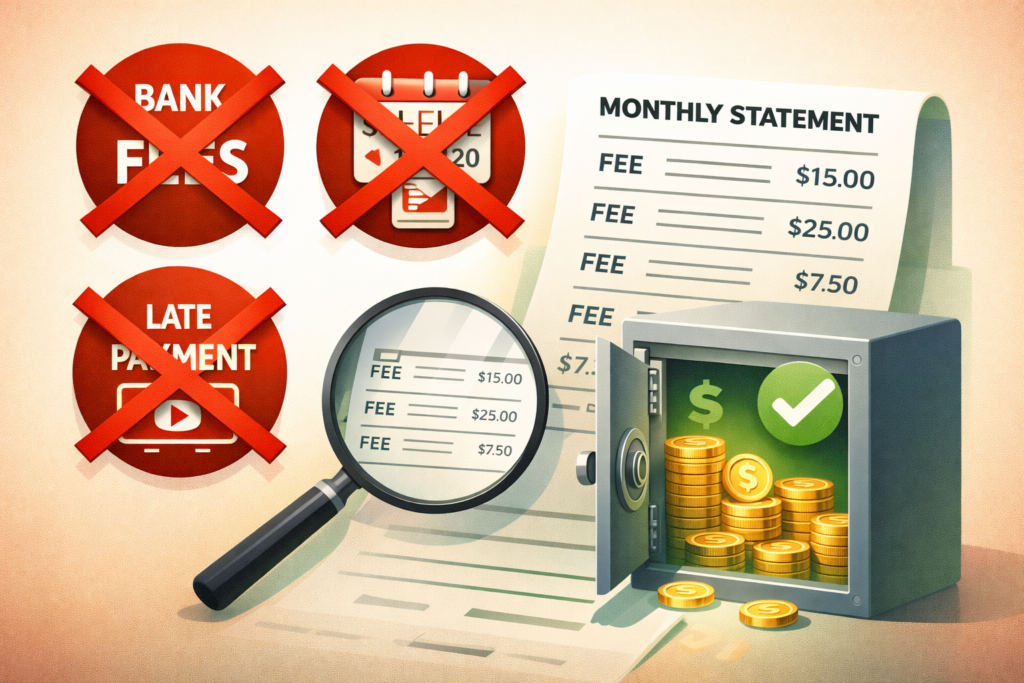
Every dollar counts when you’re wealth-building. Bank fees, late payment penalties, and unused subscriptions quietly eat away at your wealth without you even noticing.
Conduct a Fee Audit
Review your monthly statements and look for fees you can cut:
- Switch to no-fee accounts at banks or credit unions
- Cancel subscriptions you’re not using
- Set calendar reminders to pay bills on time
These small adjustments help you keep more of your hard-earned money. A typical American loses hundreds of dollars annually to unnecessary fees—money that could be growing in your savings account instead.
Quick Win: Spend 30 minutes this week reviewing your bank statements and subscription services. You might be surprised how much you can save.
6. Spend with Intention

Impulse purchases can feel good in the moment—but they rarely align with your bigger goals. Intentional spending is one of the most transformational money habits you can develop.
The Pause-and-Ask Method
Before buying anything non-essential, pause and ask yourself:
- Do I really need this?
- Will I care about it next week?
- Does it support my long-term priorities?
Intentional spending isn’t about saying no to everything—it’s about saying yes to what truly matters. And over time, that discipline adds up to significant wealth.
The 24-Hour Rule: For purchases over $50, wait 24 hours before buying. You’ll be surprised how often the urge passes, and you’ll be grateful you kept that money in your account.
7. Take Advantage of Tax-Advantaged Accounts
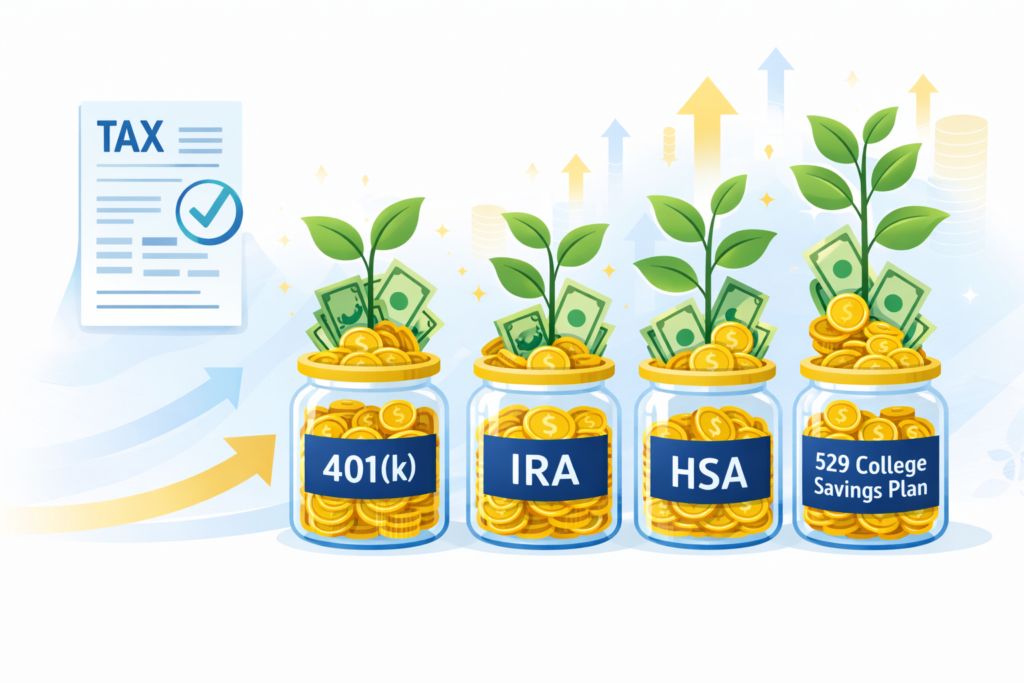
You don’t need to be a financial expert to use powerful savings tools. Tax-advantaged accounts are one of the most effective ways to accelerate your wealth-building.
Key Accounts to Consider
Contributing to accounts like these can help your money grow faster—with less going to taxes:
| Account Type | Best For | 2026 Contribution Limits |
|---|---|---|
| 401(k) | Retirement savings through employer | $23,000 (+ $7,500 catch-up if 50+) |
| IRA | Individual retirement savings | $7,000 (+ $1,000 catch-up if 50+) |
| HSA | Health expenses & retirement | $4,150 individual / $8,300 family |
| 529 | College savings plan | Varies by state |
Even small, regular contributions benefit from compounding interest and tax efficiency over time. Start where you can. Increase when you’re able. Your future self will thank you.
Action Step: If you’re not sure which approach fits your situation, consult with a financial planner or use free resources from your employer’s benefits team.
8. Build Multiple Income Streams

Diversifying your income adds financial resilience—and speeds up wealth-building significantly. Relying on a single income source is risky in today’s economy.
Ways to Create Additional Income
Whether it’s a side hustle, freelance work, rental income, or investing in dividend-paying assets, even a modest second income can make a big difference.
Popular Income Stream Ideas:
- Freelance writing, design, or consulting
- Part-time remote work in your field
- Rental property income
- Dividend-paying stocks and ETFs
- Online courses or digital products
Use extra income wisely to:
- Pay down debt faster
- Build savings more aggressively
- Invest more toward retirement
The goal isn’t just to earn more—it’s to use that income wisely to accelerate your path to financial freedom.
9. Conduct an Annual Financial Check-In

Once a year, take time to sit down and review your full financial picture. This is your progress report for your financial life.
What to Review Annually
Look at your:
- Savings and checking accounts
- Credit score and credit reports
- Debt balances and payoff progress
- Insurance coverage
- Investment accounts performance
Ask yourself: What’s working? What needs improvement? What’s my next financial milestone?
You don’t need a financial advisor for this—just a quiet hour and a clear view of your numbers. However, if your situation is complex (marriage, inheritance, sold house, laid off, etc.), consider scheduling a session with a financial planner.
Pro Tip: Schedule your annual financial check-in for the same date each year—perhaps your birthday or the first week of January—so it becomes a non-negotiable habit.
10. Stay Focused on Progress, Not Perfection

Here’s the truth: you will have setbacks. Everyone does. What matters is that you keep going.
The Consistency Mindset
One of the most important wealth-building habits is consistency. Wealth isn’t built through perfection—it’s built in how you respond when things don’t go as planned.
How to Stay Committed:
- Adjust when needed without guilt
- Celebrate wins, no matter how small
- Learn from your missteps
- Always keep your eyes on your long-term goals
Remember: building wealth is a marathon, not a sprint. The people who achieve financial freedom aren’t the ones who never make mistakes—they’re the ones who never give up.
11. Real Wealth Is Built One Habit at a Time

There’s no single formula for building wealth—but there are proven habits that can help. Consistency, awareness, and purpose go a long way in creating financial stability and freedom.
When you make smart, intentional choices every day, you’re not just improving finances. You’re changing your future.
Whether you’re:
- Saving for the future
- Managing everyday spending
- Planning for retirement
- Just getting started on your financial journey
…these daily money habits will serve as your roadmap to success.
Bonus: 12 Small Money Habits to Pick Up
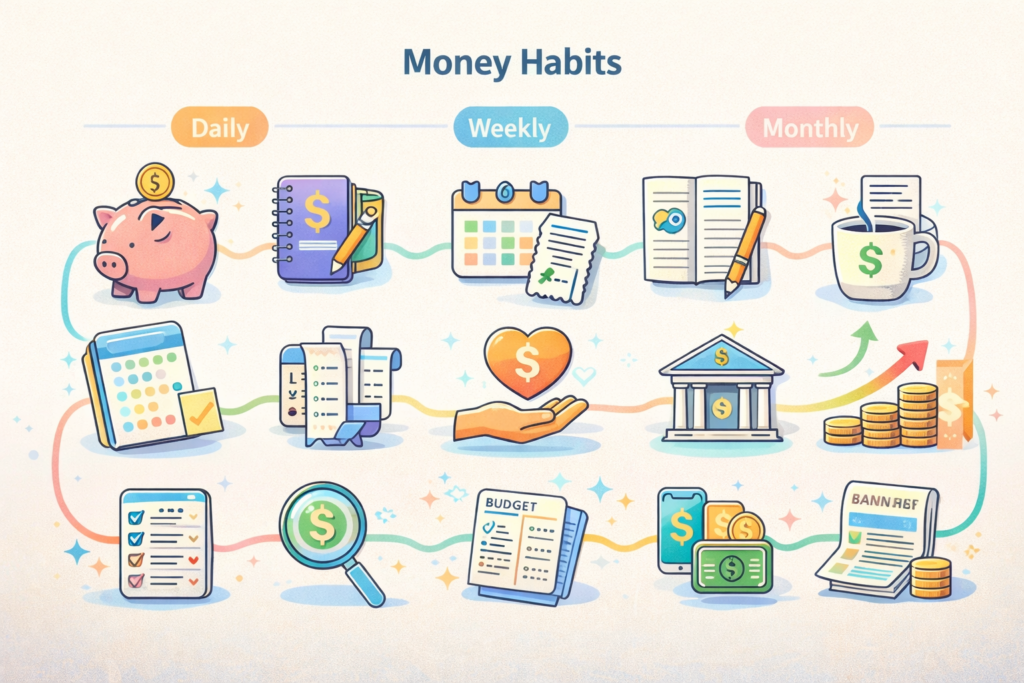
Feel confident your money habits are helping you reach your goals with these low-lift ideas. Many women and career professionals have goals to take control of their finances, but when you’re swapping out old money habits for new ones, how do you know they’re the right ones?
One reason might be that we’re thinking too big. Research supports the idea that the key to achieving big goals is breaking them down into bite-sized tasks. When we practice small money habits, we notice small wins, which can be truly transformational because they produce visible results.
Good Money Habits to Automate
Pay yourself first with a budgeting tip that works: set up a direct deposit straight from your paycheck or from your checking account into your emergency fund, retirement account, and other investment accounts. Automating payments to Future You means you’re consistently making progress toward your goals.
Set up recurring payments to avoid the financial stress of a missed payment deadline. Plus, some insurance companies or student loan servicers offer discounts if you set up autopay. Don’t forget to set aside recurring deposits into a sinking fund for non-monthly expenses like vet bills and oil changes.
Good Money Habits to Practice Daily
Check account balances even when it’s hard to look at. Add checking your account activity to your morning routine. Even if you know you have enough to pay bills or cover that charge, checking balances in the morning helps you review yesterday’s spending and reset your money mindset for the day ahead.
Organize receipts as you go to make year-end tax planning easier. File away relevant receipts for deductions and FSA reimbursement as you receive them. For physical receipts, choose one container and keep it in an easy-to-access place. For digital receipts, set up inbox rules so incoming receipts automatically get sorted into a certain folder or label.
Good Money Habits to Practice Weekly
Track your small wins by getting even more micro. In addition to tracking progress toward big savings and investing goals—whether a vacation or a down payment on a home—spot and celebrate weekly accomplishments that tend to go unnoticed, like checking account balances every AM or spending $0 on Tuesday. Create a spreadsheet, write in a journal, or use a sticky note on your computer monitor to record weekly victories.
Buy the damn latte (or flowers) without guilt. Small weekly expenses like barista-brewed coffee, fresh flowers, the more expensive toilet paper, or a happy-hour cocktail aren’t getting in the way of your long-term financial success. Trust us, we did the math. Those little purchases make life enjoyable, and you deserve to enjoy life.
Good Money Habits to Practice Monthly
Create a budget that works as a way to keep track of how much you have to spend on fun stuff, not just as a restriction. Review your budget each month to check that it’s realistic and that you’re staying on track. If you’re not, don’t be hard on yourself—simply adjust it for the next month until you find a balance that works for both you and Future You.
Build a donation habit with a regular monthly giving schedule. They get year-round support, and you make donations fit into your budget by giving 12 smaller amounts instead of a big chunk once. This approach might even allow you to give more over time.
Good Money Habits to Practice Quarterly
Keep a money mindset journal because a lot of the work of achieving financial goals is mental. If you’ve been conditioned your whole life to believe you’re “bad with money,” it’s time to take back your financial power. Get started by journaling a few times a year about your relationship with money, past and present. Work to unlearn myths and toxic thought patterns.
Some prompts: What money lies have I been told and bought into? How often do I worry about money? What money moves can I make to feel financially prepared? How can I get more comfortable talking about money?
Check for lifestyle creep when your expenses increase at the same rate as your income. Set quarterly financial health check-ins to keep yourself honest. If you get a raise, bonus, extra cash from tax refunds, or birthday gifts, a little self-gift-giving is appropriate. But keeping fixed costs down as income goes up is probably the easiest way to help your Future You budget grow.
Good Money Habits to Practice Annually
Review your core values—the core beliefs and principles that bring meaning and purpose to your life. When you use them to guide financial decisions, you make more intentional choices. As you evolve, your core values do too. Take time once a year to reevaluate them. What new values are helping you spend intentionally and invest intentionally?
Sync with your financial planner at least once a year. Review that your finances and goals are on track. Notify them of lifestyle changes that might affect your financial plan—whether you got married, got laid off, sold your house, or received an inheritance. Your financial planner will help you make the most of your unique situation.
FAQ: Money Habits for Wealth Building
How long does it take to build good money habits?
Research suggests it takes an average of 66 days to form a new habit. However, financial habits can take longer because they involve changing deeply ingrained behaviors and beliefs about money. Start with one habit, master it, then add another.
What are the most important money habits for beginners?
The three most important money habits for beginners are: (1) paying yourself first through automatic savings, (2) tracking your spending to build awareness, and (3) automating bill payments to avoid late fees and missed opportunities.
Can I build wealth on a modest income?
Absolutely! Building wealth isn’t about how much you earn—it’s about the consistent habits you develop. Many people with modest incomes achieve financial freedom through small, regular contributions to savings and investments over time.
How do I overcome bad money habits like overspending?
Overcoming bad money habits requires awareness, intention, and systems. First, identify your triggers for overspending. Then, create barriers by removing saved payment methods and implementing a 24-hour waiting period for purchases. Finally, replace bad habits with positive ones like tracking spending daily.
What’s the best way to start if I’m living paycheck to paycheck?
If you’re living paycheck to paycheck, start by building a small emergency fund of $500-$1,000. Cut unnecessary fees and subscriptions. Set up automatic transfers of even $10 per paycheck to savings. As you reduce debt and increase income, gradually increase your savings rate.
How often should I review my financial goals?
Review your financial goals quarterly at minimum, with a comprehensive annual financial check-in. Monthly budget reviews are also important to ensure you’re staying on track. Adjust goals as your circumstances and priorities evolve.
Take Action Today
You now have a complete roadmap for developing the daily money habits that build wealth over time. Remember: financial confidence doesn’t come from thinking too big—it comes from consistent, small wins that produce visible results.
Your Next Steps:
- Choose ONE habit from this list to start today
- Set up automation where possible
- Track your progress weekly
- Celebrate small wins along the way
- Review and adjust monthly
Building wealth is a journey, not a destination. Every intentional choice you make today is an investment in your future self. Start where you are, use what you have, and do what you can.
Disclaimer: This article is for informational purposes only and does not constitute financial advice. Consult with a qualified financial planner for personalized guidance based on your unique situation.
Related Articles:
- How to Create a Budget That Actually Works
- The Complete Guide to Emergency Funds in 2026
- Retirement Planning Basics for Every Age
- How to Pay Off Debt While Building Savings
Share This Article: Help others build better money habits by sharing this guide on social media!
Updated: January 1, 2026

Founder of Jobzhandle.com | Career Strategist & Personal Finance Enthusiast. I help professionals grow their skills, manage their money wisely, and explore new income opportunities. My goal is to turn career and financial goals into reality with simple, proven tips.
1 thought on “10 Daily Money Habits That Build Wealth Over Time in 2026”